Wednesday, December 24, 2025
ADVT 
Health

Inherited viruses make us smarter

Darpan News Desk IANS, 13 Jan, 2015 10:57 AM
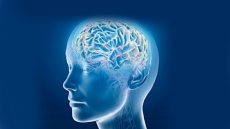
    Long thought to be "junk DNA" of no real use, millions of years old inherited viruses actually play an important role in making the human brain dynamic and multifaceted in its functions, says a study.
     
    These endogenous retroviruses that constitute around five percent of our DNA were earlier thought to be just a side-effect of our evolutionary journey.
     
    Retroviruses seem to play a central role in the basic functions of the brain, more specifically in the regulation of which genes are to be expressed and when.
     
    "We have been able to observe that these viruses are activated specifically in the brain cells and have an important regulatory role," said head of the research team Johan Jakobsson from Lund University in Sweden.
     
    "We believe that the role of retroviruses can contribute to explaining why brain cells in particular are so dynamic and multifaceted in their function," Jakobsson added.
     
    The reason the viruses are activated specifically in the brain is probably due to the fact that tumours cannot form in nerve cells, unlike in other tissues.
     
    The findings based on studies of neural stem cells show that these cells use a particular molecular mechanism to control the activation processes of the retroviruses.
     
    The results open up potential for new research paths concerning brain diseases linked to genetic factors such as neurodegenerative diseases, psychiatric illness and brain tumours, the researchers pointed out.
     
    The study appeared in the journal Cell Reports.

    MORE Health ARTICLES

    Did You Know: Nearly 1,700 US teens turn mothers per week

    Did You Know: Nearly 1,700 US teens turn mothers per week
    Births to younger teens aged between 15 and 17 have declined over the past 20 years in the US, but still account for about a quarter of teen births, or nearly 1,700 births a week, a report by the US Centers for Disease Control and Prevention (CDC) has revealed.

    Did You Know: Nearly 1,700 US teens turn mothers per week

    Soon, trees to deliver high-power storage devices

    Soon, trees to deliver high-power storage devices
    In a major breakthrough, scientists have found a novel way to make high-tech energy storage devices from your neighbourhood tree.

    Soon, trees to deliver high-power storage devices

    Revealed: How Chinese have faster eye movement

    Revealed: How Chinese have faster eye movement
    Ever wondered how quickly Chinese people move their eyes? It has nothing to do with the neurological behaviour or culture in people of Chinese origin.

    Revealed: How Chinese have faster eye movement

    Decoded: How You Decide Who Is More Popular

    Decoded: How You Decide Who Is More Popular
    Your brain knows for sure who attracts more eyeballs in your own circle as a new research has found how our brains recognise popular people. People track popularity largely through the brain region involved in anticipating rewards.

    Decoded: How You Decide Who Is More Popular

    How watching movies synchronises viewers' brains

    How watching movies synchronises viewers' brains
    Do you know that while watching a movie, your brain reacts to it immediately in a way similar to other people's brains? Researchers have succeeded in developing a method fast enough to observe immediate changes in the function of the brain even when watching a movie. 

    How watching movies synchronises viewers' brains

    Twitter, Facebook driving couples to break relationships!

    Twitter, Facebook driving couples to break relationships!
    Arguments over social media platforms among romantic partners are damaging relationships, ending in negative outcomes like emotional and physical cheating, breakup and divorce, a significant research reveals.

    Twitter, Facebook driving couples to break relationships!