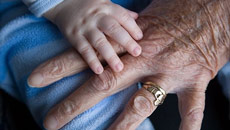
Vardhan Singh, a 65-year-old patient of acute anaemia, met with an accident 25 years ago. The grievous injuries he suffered and the loss of blood compelled doctors to transfuse extra blood to his body.
However, the non-availability of blood of Vardhan's blood group in the hospital made his family members purchase blood from a private blood bank from Bijnor in Uttar Pradesh.
Though it saved his life at that moment, it proved fatal in the long run!
The unscreened blood from Bijnor was contaminated with the Hepatitis C virus (HCV). Its transfusion into his body is the reason he is now suffering from liver cirrhosis at its last stage.
Cirrhosis is scarring of the liver as a result of continuous, long-term damage. Scar tissue replaces healthy tissue in the liver and prevents it from working properly.
Despite doctors clearly saying he will survive for not more than three months, Vardhan Singh is currently under treatment at a government hospital in Delhi.
He is not alone. Hamid, Sujata, Hari Singh are a few names among the millions of others mentioned in government hospital records across India who are battling the severe consequences caused by Hepatitis C.
Hepatitis C is completely curable at its initial stages, but just the opposite with the development of the disease.
Medical experts suggest that all of these people could have been saved just by getting the blood screened before transfusion.
"Hepatitis C is a 'silent' virus, and because many people feel no symptoms, they could be infected for years without knowing it. What mostly happens is that people start feeling the symptoms only when HCV leads to cancer or cirrhosis," Subrat Kumar Acharya, head of gastroenterology at the All India Institute of Medical Science (AIIMS), told IANS.
He said the damage caused by cirrhosis cannot be reversed and eventually can become so extensive that the patient's liver stops functioning. This is called liver failure.
According to AIIMS, about 10 million Indians are anti-HCV positive and five million of them may be viraemic.
Of these, nearly one million (25 percent) may develop chronic liver diseases within two decades and one percent of them may develop liver cancer.
Acharya said the reason why Indians are highest anti-HCV positive is because the screening of blood in blood banks started only in 2002. Before that, donors who wished to donate blood did not have to undergo any sort of screening.
"I can confidently say that currently there are millions of Indians living with the Hepatitis virus in them, as there are high chances that they have been transfused with unscreened blood," Acharya said.
According to the World Health Organisation (WHO), about 130-170 million people worldwide are chronologically infected with HCV, and more than 350,000 people die due to Hepatitis C-related liver diseases each year.
Acharya said 70-80 percent of the people with Hepatitis do not have any symptoms.
"Patients should get their blood test done once they face problems like flu, fatigue, nausea, aching muscles and joints, anxiety and depression, poor concentration, stomach ache and loss of appetite," he said.
"Though there are a variety of tests to diagnose HCV infection, people need to get their blood test done," he said.
Agreed Rajnish Monga, consultant for gastroenterology and hepatology at the Gurgaon-based Paras Hospital.
"Most of the time, these viruses are detected during blood donation or health checkups or family screening of patients," Monga told IANS.
"Patients of previously unscreened blood, products and organs, people exposed to unsterile medical or dental equipment, occupational exposure to blood, injecting drug users sharing contaminated needles are the other reasons that leads to Hepatitis C, which even after spreading in the body will not show any symptom and finally destroy the liver," he said.
B.R. Das, president of research and innovation for mentor-molecular pathology and clinical research services at SRL Diagnostics, pointed out the latest treatments for Hepatitis C infection.
"Accurate assessment of liver fibrosis is a vital need for successful individualised management of disease activity in patients," he told IANS.
Though blood tests can help detect Hepatitis C infection at an early stage, there are new techniques that have come up in the market, he said.
Researchers have come up with a new treatment called "Echosens Fibro Meter Virus" that will help in early screening and diagnosis of fibrosis and cirrhosis, Das said.
The Echosens Fibro Meter Virus has been extensively evaluated through robust clinical studies and has demonstrated highest possible accuracy in assessing liver damage like fibrosis or cirrhosis.
"This test provides a safe and convenient means for two clinically relevant end points -- detection of significant fibrosis and detection of cirrhosis. It is the only available non-invasive test which provides quantitative estimate of fibrosis staging, thereby providing opportunity for serial monitoring of fibrosis in suspected cases," he said.
"The test costs just Rs.3,000, and will help patients undergo tests, what they used to avoid due to the earlier high costs," he said.