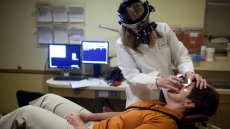
Shift workers, healthcare workers and indoor workers in particular are at high risk of vitamin D deficiency, researchers at the University of Alberta, Canada suggest.
Understanding the prevalence of vitamin D deficiency in different professions could improve public health interventions and prevention efforts.
Dr Sebastian Straube, the corresponding author said: "Our results suggest that occupation is a major factor that may contribute to suboptimal vitamin D levels.
Regular screening of vitamin D levels in at-risk groups should be considered for future clinical practice guidelines and public health initiatives. Workplace wellness programs could include education about the importance of adequate vitamin D levels. This could help prevent adverse health outcomes linked to vitamin D deficiency, such as metabolic disorders, psychiatric and cardiovascular disorders, and cancer."
The researchers found that prevalence of vitamin D deficiency was highest among shift workers (80% of individuals), followed by indoor workers (77%) and healthcare students (72%). Among healthcare workers, rates of vitamin D deficiency varied depending on whether they were students, medical residents (65%), practicing physicians (46%), nurses (43%) or other healthcare professionals (43%).

Dr Straube said: "Vitamin D production by the body is reliant on sunshine and UV exposure so any activity that reduces exposure tends to reduce vitamin D levels. Sunlight deprivation in young medical professionals, who may have particularly long working hours, and other indoor workers, puts them at higher risk of both vitamin D insufficiency and deficiency."
A high percentage of indoor workers (91%) were also found to have insufficient vitamin D, which means that their levels of vitamin D weren't necessarily as low as those found in vitamin D deficient individuals, but lower than levels recommended for health. By comparison, 48% of outdoor workers had vitamin D deficiency, while 75% had vitamin D insufficiency.
In order to evaluate vitamin D levels, deficiency and insufficiency in different occupations and to identify at-risk groups of workers, the authors conducted a systematic review of 71 peer-reviewed journal articles which involved 53,425 individuals in total and spanned a range of latitudes in both the Northern and Southern hemisphere.
The review may be limited by lack of agreement on the definition of vitamin D deficiency, different methodologies for assessing vitamin D levels across the included studies, and studies taking place at different latitudes, although vitamin D deficiency or insufficiency did not seem to be dependent on study location.
The authors caution that heterogeneity between studies may make conclusions derived from their combined data less reliable.
The study has been published in the open access journal BMC Public Health.