Sunday, December 28, 2025
ADVT 
Health

Learn How To Melt Stubborn 'Love Handles'

Darpan News Desk Darpan, 17 Oct, 2014 02:26 PM
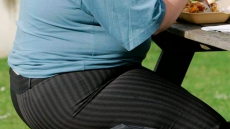
    Call it love handles, the spare tyre or the middle age spread - a lot of people struggle to do away with their extra fat around waistline. Thanks to a new way to burn energy from food, you could soon be able to do so with some “stress”.
     
    The scientists have discovered a new signalling molecule capable of activating brown fat cells called adenosine and burn energy from food.
     
    The body's own adenosine which is typically released during stress activates brown fat and “browns” white fat, the findings showed.
     
    "Not all fat is equal. Humans have two different types of fat: undesirable white fat cells which form bothersome 'love handles' as well as brown fat cells which act like a desirable heater to convert excess energy into heat,” explained professor Alexander Pfeifer from University of Bonn in Germany.
     
    “If we are able to activate brown fat cells or to convert white fat cells into brown ones, it might be possible to simply melt excess fat away,” he noted.
     
    Crucial for transmitting the adenosine signal is the adenosine receptor A2A.
     
    "If adenosine binds to this receptor in brown fat cells, fat burning is significantly stimulated," Thorsten Gnad from Pfeifer's team explained.
     
    It was previously thought not possible for adenosine to activate brown fat.
    However, the researchers were not mislead by these previous findings.
     
    In contrast, using brown fat cells removed from humans during surgery, the scientists investigated the signaling pathway for fat activation using adenosine.
     
    The results showed that rats and hamsters react differently than humans in this regard.
     
    "On the other hand, brown fat in mice behaves just as in humans," Pfeifer commented.
     
    The findings appeared in the journal Nature.

    MORE Health ARTICLES

    Walking speed may detect Alzheimer's risk

    Walking speed may detect Alzheimer's risk
    How fast people walk and whether they have memory complaints can help predict dementia early, researchers have found....

    Walking speed may detect Alzheimer's risk

    Night lights can wake up breast cancer cells

    Night lights can wake up breast cancer cells
    Sleeping at night with the lights on can not only add to your energy consumption, but also wake up breast cancer cells, a study suggests....

    Night lights can wake up breast cancer cells

    Virus linked to obesity and diabetes found

    Virus linked to obesity and diabetes found
    Biologists have discovered an extremely widespread virus that could be as old as humans and could play a major role in obesity and diabetes...

    Virus linked to obesity and diabetes found

    Men in shift work at higher type 2 diabetes risk: Study

    Men in shift work at higher type 2 diabetes risk: Study
    The reasons for this finding are not clear, say the authors, but suggest that men working shift patterns might need to pay more attention to the possible health...

    Men in shift work at higher type 2 diabetes risk: Study

    How malaria parasite resists key trial drug

    How malaria parasite resists key trial drug
    Researchers have uncovered a way the malaria parasite becomes resistant to a key clinical trial drug....

    How malaria parasite resists key trial drug

    Immune response to injury may damage brain: Study

    Immune response to injury may damage brain: Study
    Can our immune system trigger memory impairment and cognitive dysfunction leading to chronic neurological diseases? Researchers at Cleveland Clinic in Ohio believe so....

    Immune response to injury may damage brain: Study