Wednesday, December 31, 2025
ADVT 
Health

Longer Sitting Hours Ups Heart Attack Risk

Darpan News Desk IANS, 28 Apr, 2016 11:28 AM
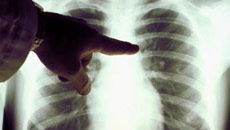
    Spending too much time sitting is bad for your heart as researchers, including one of Indian-origin, have found that sedentary behaviour is associated with increased amounts of calcium deposits in the heart's arteries, which in turn is linked to a higher risk of heart attack.
     
    "This is one of the first studies to show that sitting time is associated with early markers of atherosclerosis buildup in the heart," said senior study author Amit Khera, associate professor at University of Texas Southwestern Medical Centre. 
     
    "Each additional hour of daily sedentary time is associated with a 12 percent higher likelihood of coronary artery calcification," Khera noted.
     
    In the study published in the Journal of American College of Cardiology, the researchers concluded that reducing daily "sitting time" by even one to two hours per day could have a significant and positive impact on future cardiovascular health.
     
    For many individuals with a desk job that requires them to sit for large portions of the day, they suggested taking frequent breaks.
     
    In this study, the researchers asked some 2,000 participants to wear a device that measured their activity levels for a week. 
     
    Participants spent an average of 5.1 hours sitting per day and an average of 29 minutes in moderate to vigorous physical activity each day.
     
    "We observed a significant association between increased sedentary time and coronary artery calcium," Khera said.
     
    "These associations were independent of exercise, traditional cardiovascular disease risk factors such as diabetes and high blood pressure, and socioeconomic factors,” Khera noted.
     
    This research suggests that increased subclinical atherosclerosis characterized by calcium deposition is one of the mechanisms through which sedentary behavior increases cardiovascular risk and that this risk is distinct from the protective power of exercise," he explained.

    MORE Health ARTICLES

    Impulsive people at greater risk of food addiction

    Impulsive people at greater risk of food addiction
    Impulsive people are at greater risks of food and drug addition as impulsivity is a result of cellular activities in the part of the brain involved with reward and not a result of dysfunctional eating behaviour, a study indicated.

    Impulsive people at greater risk of food addiction

    'Lung disease linked to diabetes under-diagnosed in India'

    'Lung disease linked to diabetes under-diagnosed in India'
    An infectious lung disease - melioidosis - which is linked to diabetics is grossly under-diagnosed in India, according to a British expert.

    'Lung disease linked to diabetes under-diagnosed in India'

    Keep it going! Yawn can cool your brain

    Keep it going! Yawn can cool your brain
    It may look unpleasant in office meeting or in the middle of a social dinner but yawning does help cool your brain.

    Keep it going! Yawn can cool your brain

    Revealed: How dinosaurs shrunk into birds

    Revealed: How dinosaurs shrunk into birds
    Dinosaurs are not extinct, go tell this to your kids. There are about 10,000 species alive today - in the form of birds!

    Revealed: How dinosaurs shrunk into birds

    Sexual practices haven't changed much: Survey

    Sexual practices haven't changed much: Survey
    The time has changed but sexual practices may not. According to a fascinating study, 'hookup culture' among today's youth is just a myth and their sexual preferences are still the same as those of their parents.

    Sexual practices haven't changed much: Survey

    Mysterious 'exploding head syndrome' more common in women

    Mysterious 'exploding head syndrome' more common in women
    While most people with “exploding head syndrome” hear an abrupt loud outbursts, some hear the explosion in one ear, some in both ears, and some within their heads.

    Mysterious 'exploding head syndrome' more common in women