Thursday, January 1, 2026
ADVT 
Health

Longer Sitting Hours Ups Heart Attack Risk

Darpan News Desk IANS, 28 Apr, 2016 11:28 AM
    Spending too much time sitting is bad for your heart as researchers, including one of Indian-origin, have found that sedentary behaviour is associated with increased amounts of calcium deposits in the heart's arteries, which in turn is linked to a higher risk of heart attack.
     
    "This is one of the first studies to show that sitting time is associated with early markers of atherosclerosis buildup in the heart," said senior study author Amit Khera, associate professor at University of Texas Southwestern Medical Centre. 
     
    "Each additional hour of daily sedentary time is associated with a 12 percent higher likelihood of coronary artery calcification," Khera noted.
     
    In the study published in the Journal of American College of Cardiology, the researchers concluded that reducing daily "sitting time" by even one to two hours per day could have a significant and positive impact on future cardiovascular health.
     
    For many individuals with a desk job that requires them to sit for large portions of the day, they suggested taking frequent breaks.
     
    In this study, the researchers asked some 2,000 participants to wear a device that measured their activity levels for a week. 
     
    Participants spent an average of 5.1 hours sitting per day and an average of 29 minutes in moderate to vigorous physical activity each day.
     
    "We observed a significant association between increased sedentary time and coronary artery calcium," Khera said.
     
    "These associations were independent of exercise, traditional cardiovascular disease risk factors such as diabetes and high blood pressure, and socioeconomic factors,” Khera noted.
     
    This research suggests that increased subclinical atherosclerosis characterized by calcium deposition is one of the mechanisms through which sedentary behavior increases cardiovascular risk and that this risk is distinct from the protective power of exercise," he explained.

    MORE Health ARTICLES

    Our vegetarian ancestors were once meat lovers!

    Our vegetarian ancestors were once meat lovers!
    In a thrilling discovery, paleontologists have unearthed the earliest ancestor of land-dwelling plant eaters: The striking point is that these tiny animals were once meat lovers who evolved into herbivores.

    Our vegetarian ancestors were once meat lovers!

    Oxygen injections to protect you from air pollution

    Oxygen injections to protect you from air pollution
    Drug injections are fine but oxygen injections? As the air pollution keeps getting worse, this is the future to protect yourself from airborne diseases.

    Oxygen injections to protect you from air pollution

    Believe it or not, Leeches can fix torn ear!

    Believe it or not, Leeches can fix torn ear!
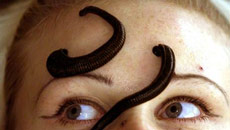
    A 19-year-old woman in the US who lost her ear to a dog attack got it back with the help of a few leeches.

    Believe it or not, Leeches can fix torn ear!

    New insights on how brain develops memories

    New insights on how brain develops memories
    In a key study that may give insights into disorders such as schizophrenia and depression, scientists have studied our ability to store memories in brain during childhood.

    New insights on how brain develops memories

    Go for food with rough texture for a healthy you!

    Go for food with rough texture for a healthy you!
    In contrast, when made to focus on the calorie content, the participants consumed a higher volume of brownies when they were hard (vs soft).

    Go for food with rough texture for a healthy you!

    Robot sex to determine how life began

    Robot sex to determine how life began
    This may come straight from Ripley's Believe It or Not! Scientists have performed robot sex to find how life began on earth. Scientists used rat-sized robots to study evolutionary patterns over thousands of generations without them growing old in the process.

    Robot sex to determine how life began