Tuesday, December 23, 2025
ADVT 
Health

Loony, To Blame Moon For Things Going Haywire

Darpan News Desk IANS, 31 Mar, 2015 12:21 PM
    It's loony to blame the full moon for things going crazy at hospital emergency rooms or in birth wards as moon has nothing to do with the timing of human births or hospital admissions, shows a research.
     
    The study reveals how intelligent and otherwise reasonable people develop strong beliefs that, to put it politely, are not aligned with reality. It's lunatic.
     
    "It must be a full moon" is a common refrain when things appear more hectic than usual.
     
    But the humble moon is innocent.
     
    "Some nurses ascribe the apparent chaos to the moon but dozens of studies show that the belief is unfounded," said Jean-Luc Margot, professor of planetary astronomy at University of California - Los Angeles (UCLA) in a paper that appeared in the journal Nursing Research.
     
    The absence of a lunar influence on human affairs has been demonstrated in the areas of automobile accidents, hospital admissions, surgery outcomes, cancer survival rates, menstruation, births, depression, violent behaviour and even criminal activity.
     
    Even though a 40-year-old UCLA study demonstrated that the timing of births does not correlate in any way with the lunar cycle, the belief in a lunar effect has persisted.
     
    Margot re-analysed the data and showed that the number of admissions was unrelated to the lunar cycle.
     
    Margot cited what scientists refer to as the "confirmation bias" - people's tendency to interpret information in a way that confirms their beliefs and ignore data that contradict them.
     
    When life is hectic on the day of a full moon, many people remember the association because it confirms their belief.
     
    But hectic days that do not correspond with a full moon are promptly ignored and forgotten because they do not reinforce the belief.
     
    The societal costs of flawed beliefs can be enormous.
     
    Perhaps, we can start by correcting our delusions about the moon, and work from there, the authors said.


    MORE Health ARTICLES

    Drinking milk can delay knee problem in women

    Drinking milk can delay knee problem in women
    Women who frequently consume fat-free or low-fat milk may delay the progression of osteoarthritis (OA) of the knee, research indicates.

    Drinking milk can delay knee problem in women

    e-cigarettes next big smoking poison, warns study

    e-cigarettes next big smoking poison, warns study
    The fast spreading e-cigarettes are undoing the anti-smoking efforts of the last three decades, health experts warn. Also, the number of people being poisoned by e-cigarettes in the US has gone up manifold in the last few years, according to official reports.

    e-cigarettes next big smoking poison, warns study

    Tiny robot that performs surgery via belly button!

    Tiny robot that performs surgery via belly button!
    Imagine a tiny robot that can enter your body via small belly button precision, perform surgery and return to its base peacefully.

    Tiny robot that performs surgery via belly button!

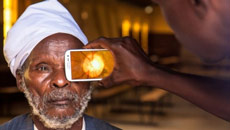
    An app to test your eyes anywhere on earth

    An app to test your eyes anywhere on earth
    In a ground-breaking innovation that could help prevent blindness in millions across the world, scientists have developed an app that allows eye tests anywhere.

    An app to test your eyes anywhere on earth

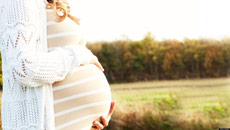
    High temperature reduces length of pregnancy: Study

    High temperature reduces length of pregnancy: Study
    If you are pregnant and wish a full-term delivery, it is better to shift to a colder place before the mercury goes up as high temperature may reduce the length of your pregnancy, research indicates.

    High temperature reduces length of pregnancy: Study

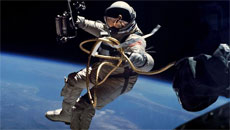
    Astronauts' space odyssey alters their hearts for 'bad'

    Astronauts' space odyssey alters their hearts for 'bad'
    In an alarming revelation, a new study finds that astronauts' hearts become more spherical when exposed to long periods of microgravity in space -- a change that could lead to cardiac problems when they are back on earth.

    Astronauts' space odyssey alters their hearts for 'bad'