Thursday, December 25, 2025
ADVT 
Health

Low sugar intake reduces tooth decay

Darpan News Desk IANS, 16 Sep, 2014 08:53 AM
    Daily intake of sugar should make up no more than three percent of total energy intake and its reduction in consumption could lead to decrease in tooth decay, finds a new research.
     
    "Tooth decay is a serious problem worldwide and reducing sugar intake makes a huge difference," said Aubrey Sheiham, emeritus professor at the University College London' department of epidemiology and public health.
     
    The study analysed the effect of sugars on dental caries - also known as tooth decay.
     
    Researchers from the University College London and London School of Hygiene and Tropical Medicine showed that sugars are the only cause of tooth decay in children and adults.
     
    "Data from Japan were particularly revealing, as the population had no access to sugar during or shortly after the Second World War. We found that decay was hugely reduced during this time, but then increased as they began to import sugar again," Sheiham added.
     
    Researchers found that the incidence of tooth decay was much higher in adults than children and increased dramatically with any sugar consumption above 0 percent of energy.
     
    Even in children, an increase from near-zero sugar to five percent of energy doubles the prevalence of decay and continues to rise as sugar intake increases.
     
    "We need to make sure that use of fruit juices and the concept of sugar-containing treats for children are no longer promoted and explicitly seen as unhelpful," asserted Philip James, a professor of Nutrition at London School of Hygiene & Tropical Medicine.
     
    Tooth decay is the most common non-communicable disease in the world, affecting 60-90 percent of school-age children and the vast majority of adults.
     
    The study appeared in the journal BMC Public Health.
    ==============================
    MORE Health ARTICLES

    New diabetes, obesity drug: Indian-American's promising research

    New diabetes, obesity drug: Indian-American's promising research
    Two researchers at Indiana University, including an Indian-American, are leading the way towards developing a new potential non-insulin drug for diabetes and obesity, which needs to be taken only once a week.

    New diabetes, obesity drug: Indian-American's promising research

    Build super muscles with soy-dairy protein

    Build super muscles with soy-dairy protein
    Not happy with gym results on your muscles? Try a blend of soy and dairy proteins after resistance exercises as this has now been touted as the best way to build muscle mass.

    Build super muscles with soy-dairy protein

    'Love hormone' bonds animals like humans

    'Love hormone' bonds animals like humans
    And you thought you had a patent on 'love hormone' when it comes to showing affection! Dogs too have oxytocin and release it in a good quantity when in love or looking for bonding.

    'Love hormone' bonds animals like humans

    Can you believe it? Metabolism existed even before origin of life, reveales study

    Can you believe it? Metabolism existed even before origin of life, reveales study
    The mystery behind how the first organisms on earth could have become metabolically active has been unlocked.

    Can you believe it? Metabolism existed even before origin of life, reveales study

    Fly's genome study offers hope for sleeping sickness

    Fly's genome study offers hope for sleeping sickness
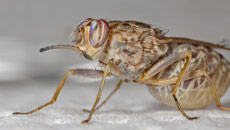
    With genome decoding of tsetse fly that causes the potentially fatal sleeping sickness disease, scientists have discovered new clues to the diet, vision and reproductive strategies of the insect.

    Fly's genome study offers hope for sleeping sickness

    Technology to catch dozing drivers on the go

    Technology to catch dozing drivers on the go
    Long rides at night can now become a lot more pleasant and safe if you listen to researchers who have developed an inexpensive and easier way to find out when the person behind the wheel is about to nod off.

    Technology to catch dozing drivers on the go