Sunday, December 28, 2025
ADVT 
Health

Low-dose aspirin reduces blood clot risk

Darpan News Desk IANS, 26 Aug, 2014 07:57 AM
    Low-dose aspirin can help prevent new blood clots among people who are at risk and have already suffered a blood clot, says a promising study.
     
    According to Australian researchers, low-dose aspirin lowers the occurrence of new venous blood clots and represents a reasonable treatment option for patients who are not candidates for long-term anticoagulant drugs such as warfarin.
     
    “Aspirin represents a useful treatment option for patients who are not candidates for anticoagulant drugs because of the expense or the increased risk of bleeding associated with anticoagulants,” claimed study's lead author John Simes, a professor at University of Sydney.
     
    During the study, compared to placebo patients, those who took 100 mg daily of aspirin had a one-third reduction in the risk of thromboembolism (obstruction of a blood vessel by a clot) and deep vein thrombosis (DVT), which is the formation of a blood clot in a deep vein, predominantly in the legs.
     
    It also reduced pulmonary embolism which is a blood clot affecting the arteries that supply blood to the lungs.
     
    Most people who have had a blood clot in a leg vein (deep-vein thrombosis) or an embolism (where the clot blocks the blood flow) have anticoagulant drug treatment (such as warfarin) for at least six months.
     
    However, long-term anticoagulant drugs are expensive and may cause bleeding in some patients.
     
    For people who are not able to cope with this, the viable alternative of taking regular aspirin will be a great benefit.
     
    “Aspirin will be ideal in many countries where prolonged anticoagulant treatment is too expensive. A major benefit of this treatment is its cost-effectiveness,” Simes added.


    MORE Health ARTICLES

    Prostate cancer linked with sex: Study

    Prostate cancer linked with sex: Study
    A study in the US has found that prostate cancer could be caused by a common infection passed on during intercourse, a leading English daily reported Tuesday.

    Prostate cancer linked with sex: Study

    Don't drink and swim: Drunk zebrafish shows why humans go nuts after booze

    Don't drink and swim: Drunk zebrafish shows why humans go nuts after booze
    High on booze, a zebrafish nearly doubled her speed in an experiment, leaving scientists with results that may help them find why some people on a high behave like weirdos in a party.

    Don't drink and swim: Drunk zebrafish shows why humans go nuts after booze

    E-cigarettes boost drug-resistant bacteria

    E-cigarettes boost drug-resistant bacteria
    Despite being labeled as a healthy alternative to cigarettes, e-cigarettes may increase the virulence of drug-resistant and potentially life-threatening bacteria, a study has warned.

    E-cigarettes boost drug-resistant bacteria

    Chip that precisely detects cancer early created

    Chip that precisely detects cancer early created
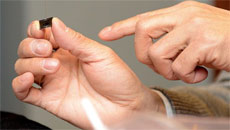
    What if we could diagnose cancer while it was still only affecting a few localised cells? Here comes an ultra-sensitive nano-chip that is capable of detecting cancer early.

    Chip that precisely detects cancer early created

    Yoga gets a new home in Finland

    Yoga gets a new home in Finland
    Yoga is set to get a new home in Finland when a studio is opened at the airport of this capital of the Nordic country.

    Yoga gets a new home in Finland

    Prehistoric skeleton confirms first American origins

    Prehistoric skeleton confirms first American origins
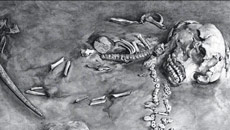
    Researchers said Thursday that they have identified a nearly complete skeleton in an underwater Mexican cave, a discovery that could help resolve a longstanding debate about the origins of the first people to inhabit the Americas.

    Prehistoric skeleton confirms first American origins