Monday, December 29, 2025
ADVT 
Health

Low-dose aspirin reduces blood clot risk

Darpan News Desk IANS, 26 Aug, 2014 07:57 AM
    Low-dose aspirin can help prevent new blood clots among people who are at risk and have already suffered a blood clot, says a promising study.
     
    According to Australian researchers, low-dose aspirin lowers the occurrence of new venous blood clots and represents a reasonable treatment option for patients who are not candidates for long-term anticoagulant drugs such as warfarin.
     
    “Aspirin represents a useful treatment option for patients who are not candidates for anticoagulant drugs because of the expense or the increased risk of bleeding associated with anticoagulants,” claimed study's lead author John Simes, a professor at University of Sydney.
     
    During the study, compared to placebo patients, those who took 100 mg daily of aspirin had a one-third reduction in the risk of thromboembolism (obstruction of a blood vessel by a clot) and deep vein thrombosis (DVT), which is the formation of a blood clot in a deep vein, predominantly in the legs.
     
    It also reduced pulmonary embolism which is a blood clot affecting the arteries that supply blood to the lungs.
     
    Most people who have had a blood clot in a leg vein (deep-vein thrombosis) or an embolism (where the clot blocks the blood flow) have anticoagulant drug treatment (such as warfarin) for at least six months.
     
    However, long-term anticoagulant drugs are expensive and may cause bleeding in some patients.
     
    For people who are not able to cope with this, the viable alternative of taking regular aspirin will be a great benefit.
     
    “Aspirin will be ideal in many countries where prolonged anticoagulant treatment is too expensive. A major benefit of this treatment is its cost-effectiveness,” Simes added.

    MORE Health ARTICLES

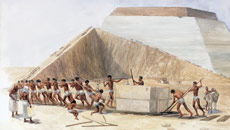
    Know how Egyptians moved giant rocks to build pyramids

    Know how Egyptians moved giant rocks to build pyramids
    It is time to rewrite history books. The mystery of how Egyptians moved huge stones to build pyramids has been unlocked, finally.

    Know how Egyptians moved giant rocks to build pyramids

    Sick wives face high divorce risk: Study

    Sick wives face high divorce risk: Study
    The vows of togetherness often fall apart among couple when the wife - but not the husband - becomes seriously ill, a significant study has revealed.

    Sick wives face high divorce risk: Study

    This font would let your kid learn faster

    This font would let your kid learn faster
    This dyslexic-friendly font - derived from Comic Sans font - is shaped similarly to the way kids naturally write. 

    This font would let your kid learn faster

    Facebook's healthy 'move,' acquires fitness app

    Facebook's healthy 'move,' acquires fitness app
    Social networking site Facebook has acquired Helsinki-based fitness tracking app Moves in an undisclosed deal.

    Facebook's healthy 'move,' acquires fitness app

    Detailed suicide coverage driving teenagers to end life: Study

    Detailed suicide coverage driving teenagers to end life: Study
    The sensationalisation of suicide coverage in media may trigger vulnerable readers, especially teenagers, to commit suicide themselves, a study has indicated.

    Detailed suicide coverage driving teenagers to end life: Study

    Why westerners can't pronounce Sanskrit word 'Sri'

    Why westerners can't pronounce Sanskrit word 'Sri'
    Ever wondered why most Britishers could not pronounce the Sanskrit word 'sri' - a common Indian honorific for males - and instead settled for 'shri', a combination of sounds found in English words like shriek and shred?

    Why westerners can't pronounce Sanskrit word 'Sri'