Monday, December 29, 2025
ADVT 
Health

Low-dose aspirin reduces blood clot risk

Darpan News Desk IANS, 26 Aug, 2014 07:57 AM
    Low-dose aspirin can help prevent new blood clots among people who are at risk and have already suffered a blood clot, says a promising study.
     
    According to Australian researchers, low-dose aspirin lowers the occurrence of new venous blood clots and represents a reasonable treatment option for patients who are not candidates for long-term anticoagulant drugs such as warfarin.
     
    “Aspirin represents a useful treatment option for patients who are not candidates for anticoagulant drugs because of the expense or the increased risk of bleeding associated with anticoagulants,” claimed study's lead author John Simes, a professor at University of Sydney.
     
    During the study, compared to placebo patients, those who took 100 mg daily of aspirin had a one-third reduction in the risk of thromboembolism (obstruction of a blood vessel by a clot) and deep vein thrombosis (DVT), which is the formation of a blood clot in a deep vein, predominantly in the legs.
     
    It also reduced pulmonary embolism which is a blood clot affecting the arteries that supply blood to the lungs.
     
    Most people who have had a blood clot in a leg vein (deep-vein thrombosis) or an embolism (where the clot blocks the blood flow) have anticoagulant drug treatment (such as warfarin) for at least six months.
     
    However, long-term anticoagulant drugs are expensive and may cause bleeding in some patients.
     
    For people who are not able to cope with this, the viable alternative of taking regular aspirin will be a great benefit.
     
    “Aspirin will be ideal in many countries where prolonged anticoagulant treatment is too expensive. A major benefit of this treatment is its cost-effectiveness,” Simes added.
    MORE Health ARTICLES

    Now, 3D-printed plaster cast to heal wound faster

    Now, 3D-printed plaster cast to heal wound faster
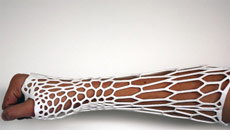
    In what could revolutionise plaster cast technology, a Turkish design student has unveiled a slick 3D-printed cast with ventilation holes that reduces healing time by around 40 percent than currently used plaster casts.

    Now, 3D-printed plaster cast to heal wound faster

    Smart cup that delivers coffee, news too!

    Smart cup that delivers coffee, news too!
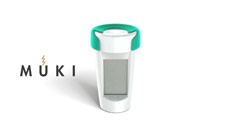
    Reading the morning newspaper while sipping a cup of coffee is set to become an even smoother experience as a Finnish coffee roastery company has developed a smart coffee cup that could also display an e-paper.

    Smart cup that delivers coffee, news too!

    An 'upside-down planet' discovered

    An 'upside-down planet' discovered
    Like so many interesting discoveries, this one happened largely by accident. An astronomer has discovered an ‘upside-down planet’ that reveals new method for studying binary star systems.

    An 'upside-down planet' discovered

    Our ancestors enjoyed summer holidays at Antartica!

    Our ancestors enjoyed summer holidays at Antartica!
    If this information stands true, the history books have to be rewritten soon. According to scientists, some parts on the coldest region on our earth - Antartica - was as warm as today's California coast.

    Our ancestors enjoyed summer holidays at Antartica!

    Garnish food with edible flowers for disease-free life!

    Garnish food with edible flowers for disease-free life!
    Forget food, try some flowers instead to increase immunity. If we go by a new research, common edible flowers in China are rich in phenolics and have excellent antioxidant capacity.

    Garnish food with edible flowers for disease-free life!

    Humans left Africa in two migration waves: Study

    Humans left Africa in two migration waves: Study
    In a significant discovery, researchers have found that modern humans may have dispersed in more than one wave of migration out of Africa.

    Humans left Africa in two migration waves: Study