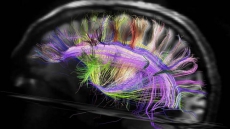
The brains of young adult marijuana users react differently to social exclusion than do those of non-users, finds a new study, adding that young adults who regularly use marijuana display altered brain activation patterns during social exclusion.
The brains of young adults who smoke marijuana two to four times a week were less likely to react to social exclusion than the brains of non-users.
"Peer groups are one of the most important predictors of young adult marijuana use, and yet we know very little about the neural correlates of social rejection in those who use marijuana," said lead author Jodi Gilman, assistant professor at Harvard Medical School in US.
During peer rejection, young adult marijuana users reduced activation in the insula, a brain region usually active during social rejection, which may reflect the impaired processing of social information in marijuana users.
Reduced activity in the insula to peer rejection could indicate that marijuana users are less conscious of social norms, or have reduced capacity to reflect or react to negative social situations.
"The unexpected reduction in insula response may indicate that marijuana users are less conscious of social norms or have reduced ability to reflect on negative social situations,” explained Gilman.
The findings were detailed in the journal Biological Psychiatry: Cognitive Neuroscience and Neuroimaging.
The team conducted a magnetic resonance study using a Cyberball task -- a computerised tool that is typically used to assess people's reaction to social exclusion, such as a rejection or ostracism -- where participants played a computerised game of catch while undergoing a non-invasive brain scan.

They enrolled 42 young adults aged 18 to 25, out of which 20 reported using marijuana two to four times a week and 22 reported no recent marijuana use.
Unknown to the study participants, the other "players" in the game were computers and were programmed to exclude them for a portion of the game.
They focused on three brain regions of participants that previous studies have associated with the response to social exclusion - the anterior insula, the ventral anterior cingulate cortex (vACC) -- the region involved in decision-making and emotional regulation and regulates physiological processes, such as blood pressure and heart rate and the orbitofrontal cortex (OFC) -- the region involved only in decision-making.
The team found that for the control group of non-marijuana users, there was activation in the vACC and the insula during the exclusion portion of the game. For the users, the researchers found activation in the vACC but none in the insula. The researchers observed no significant activity in the OFC in both groups.
More research is imperative to assess the developmental trajectory of this altered social processing and determine whether impaired processing of social exclusion is caused by, is a result of, or develops along with marijuana use, the researchers concluded.