Thursday, December 18, 2025
ADVT 
Health

Monitor pulse after stroke to avoid second

Darpan News Desk IANS, 24 Jul, 2014 08:00 AM
    Regularly monitoring your pulse after a stroke or the pulse of a loved one who has experienced a stroke can prevent a second stroke.
     
    Screening the pulse is the method of choice for checking irregular heartbeat of people over 65 years who have never had a stroke.
     
    "Our study shows it may be a safe, effective, non-invasive and an easy way to identify people who might need more thorough monitoring to prevent a second stroke," informed Bernd Kallmunzer from Erlangen University in Erlangen, Germany.
     
    For the study, 256 people who had experienced a type of stroke called an acute ischemic stroke and the patients' relatives were given instructions on measuring the pulse to detect irregular heartbeat.
     
    The measurements were then compared to a recording of electrical activity in the heart which showed that 57 of the participants had irregular heartbeat.
     
    The study found that pulse measurement taken by doctors had a sensitivity of nearly 97 percent and a specificity of 94 percent in detecting irregular heartbeat.
     
    Sensitivity is the percentage of actual positives that are correctly identified as positive, and specificity is the percentage of negatives that are correctly identified as negative.
     
    For patients' relatives, the sensitivity was 77 percent and the specificity was 93 percent.
     
    For patients taking their own measurements, 89 percent performed reliable measurements with a sensitivity of 54 percent and specificity of 96 percent.
     
    False positive results occurred in six people and false negative results in 17 people.
     
    "The low rate of false positives in this study shows that health care professionals, care givers and patients can be guided to use this simple tool as a first step in helping to prevent a second stroke," Kallmunzer explained.
     
    The study was published in the online issue of Neurology.

    MORE Health ARTICLES

    Befriend a cyber buddy to stay motivated

    Befriend a cyber buddy to stay motivated
    Although a human partner is a better motivator during exercise, a software-generated cyber partner can also be effective in making you work a little extra, research reveals.

    Befriend a cyber buddy to stay motivated

    New method to treat cocaine addiction effectively

    New method to treat cocaine addiction effectively
    There is hardly any effective medications for cocaine addiction, but researchers have now discovered a new compound that can halt cocaine addiction, raising hope for new treatment for drug addicts.

    New method to treat cocaine addiction effectively

    How bariatric surgery can help control diabetes

    How bariatric surgery can help control diabetes
    That bariatric surgery, or obesity surgery, leads to weight loss is well known, but researchers have now identified the mechanism why obesity surgery also leave positive effects on diabetes and heart diseases.

    How bariatric surgery can help control diabetes

    Now, 3D-printed plaster cast to heal wound faster

    Now, 3D-printed plaster cast to heal wound faster
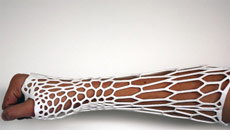
    In what could revolutionise plaster cast technology, a Turkish design student has unveiled a slick 3D-printed cast with ventilation holes that reduces healing time by around 40 percent than currently used plaster casts.

    Now, 3D-printed plaster cast to heal wound faster

    Smart cup that delivers coffee, news too!

    Smart cup that delivers coffee, news too!
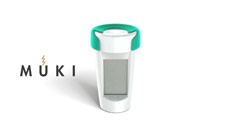
    Reading the morning newspaper while sipping a cup of coffee is set to become an even smoother experience as a Finnish coffee roastery company has developed a smart coffee cup that could also display an e-paper.

    Smart cup that delivers coffee, news too!

    An 'upside-down planet' discovered

    An 'upside-down planet' discovered
    Like so many interesting discoveries, this one happened largely by accident. An astronomer has discovered an ‘upside-down planet’ that reveals new method for studying binary star systems.

    An 'upside-down planet' discovered