Wednesday, February 11, 2026
ADVT 
Health

More kids at risk of developing diabetes from womb, says study

Darpan News Desk IANS, 26 Aug, 2014 07:57 AM
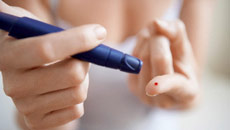
    New research shows that children exposed to gestational diabetes in the wombs are nearly six times more likely to develop diabetes or prediabetes than children who are not exposed.
     
    With the increase in gestational diabetes mellitus (GDM), there is a growing need to understand the effects of glucose exposure on the newborn in the womb, at birth and later in life, it adds.
     
    "Obese normal glucose-tolerant children of GDM mothers have pre-existing defects in beta cell function," said Dr Sonia Caprio from Yale University's school of medicine in New Haven.
     
    This is, in turn, a strong risk factor for these children to develop prediabetes or diabetes, Dr Caprio added.
     
    For the study, researchers selected 255 obese adolescents with a normal glucose tolerance and were investigated for in utero exposure to GDM and underwent an oral glucose tolerance test (OGTT), which was repeated after approximately three years.
     
    They found that 210 (82 percent) participants were not exposed to GDM (called the NGDM group), and 45 (18 percent) were exposed to GDM (the EGDM group).
     
    "Exposure to GDM was the most significant predictor of developing impaired glucose tolerance (IGT) or type 2 diabetes, with an increased risk of almost six times for those children exposed to GDM in the womb," Caprio maintained.
     
    The ever growing number of women with gestational diabetes (18 percent) suggests that the future will be filled with children with early diabetes at a rate that far exceeds the current prevalence, authors concluded.
     
    The study appeared in the journal Diabetologia.

    MORE Health ARTICLES

    Sexual conflict over mating affects women more: Study

    Sexual conflict over mating affects women more: Study
    In experiments on beetles, British researchers at University of Exeter used artificial selection and mating crosses among selection lines to determine if and how mating behaviours co-evolve with parental care behaviours.

    Sexual conflict over mating affects women more: Study

    Mind vs body: What is a better lie detector?

    Mind vs body: What is a better lie detector?
    To know if the person in front of you is lying, you may rely a lot on your instincts as more than the conscious mind, the body may act as a better lie detector, suggests a study.

    Mind vs body: What is a better lie detector?

    Alcohol, drugs together put kids at higher driving risk

    Alcohol, drugs together put kids at higher driving risk
    Teenagers who drink alcohol and smoke marijuana together may be at increased risk for unsafe driving, a study shows.

    Alcohol, drugs together put kids at higher driving risk

    New diabetes, obesity drug: Indian-American's promising research

    New diabetes, obesity drug: Indian-American's promising research
    Two researchers at Indiana University, including an Indian-American, are leading the way towards developing a new potential non-insulin drug for diabetes and obesity, which needs to be taken only once a week.

    New diabetes, obesity drug: Indian-American's promising research

    Build super muscles with soy-dairy protein

    Build super muscles with soy-dairy protein
    Not happy with gym results on your muscles? Try a blend of soy and dairy proteins after resistance exercises as this has now been touted as the best way to build muscle mass.

    Build super muscles with soy-dairy protein

    'Love hormone' bonds animals like humans

    'Love hormone' bonds animals like humans
    And you thought you had a patent on 'love hormone' when it comes to showing affection! Dogs too have oxytocin and release it in a good quantity when in love or looking for bonding.

    'Love hormone' bonds animals like humans