Sunday, December 28, 2025
ADVT 
Health

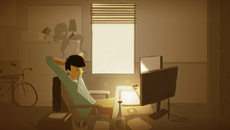
Myths About Noon Nap Busted

Darpan News Desk Darpan, 02 Dec, 2014 02:04 PM
    It is often believed that an afternoon nap can do a body good. But there are people who are not convinced with the power of the afternoon snooze.
     
    Here are common myths about napping listed by huffingtonpost.com:
     
    Myth: Napping is only for the lazy or those under the age of 5.
     
    Fact: A short snooze can boost everything from alertness and memory to creativity and productivity. And not one of those perks sounds like laziness.
     
    Myth: If I take a nap, I'll only wake up feeling worse.
     
    Fact: That groggy feeling after you wake up from a nap is real, but it's not a guarantee. How you feel after your snooze is probably a factor of how long you slept. Experts generally agree that a nap should last no longer than 30 minutes. 
     
    "If you take it longer than 30 minutes, you end up in deep sleep," said sleep expert Michael J. Breus. 
     
    Anyone who has ever felt worse upon rising from a nap is "sleeping too long," he added. 
     
    Myth: Coffee before a nap will keep me up.
     
    Fact: There is such a thing as a caffeine nap -- affectionately referred to as the nappuccino. To do it right, enjoy that cup of coffee or tea, and then take your nap. As you sleep, the caffeine will begin to kick in (it reaches peak effectiveness about 30 minutes after you drink it), so that when you wake, you'll be feeling your most refreshed.


    MORE Health ARTICLES

    Men in 'healthy' countries have eyes for beauty!

    Men in 'healthy' countries have eyes for beauty!
    All the pretty women out there, if wooing a man is what is in your mind, move on to a country where conditions are not that harsh as feminine charm sweeps men living in countries with 'healthy' conditions.

    Men in 'healthy' countries have eyes for beauty!

    Health Alert- WHO report reveals worldwide threat to public health

    Health Alert- WHO report reveals worldwide threat to public health
    A new report by the World Health Organisation (WHO) - its first to globally look at antimicrobial resistance, including antibiotic resistance - reveals that this serious threat is no longer a prediction for the future but is happening right now in every region of the world and has the potential to affect anyone, of any age, in any country.

    Health Alert- WHO report reveals worldwide threat to public health

    TV shows can transmit stress too: Study

    TV shows can transmit stress too: Study
    Just like cold, stress can also be contagious and it matters only a little whether we have any relation with the stressed person that we may come in contact with or not, says a study.

    TV shows can transmit stress too: Study

    Vitamin D deficiency may lead to prostate cancer: Study

    Vitamin D deficiency may lead to prostate cancer: Study
    Get under the morning sun sooner rather than later as vitamin D deficiency has now been linked to aggressive prostate cancer, an alarming study indicated.

    Vitamin D deficiency may lead to prostate cancer: Study

    Where butterflies, bees feed on crocodile tears!

    Where butterflies, bees feed on crocodile tears!
    Look at those crocodile tears in your kid's eyes more carefully. These are an abundant source of salt and other rare minerals and proteins for some!

    Where butterflies, bees feed on crocodile tears!

    Babies learn to recognise pictures before first birthday!

    Babies learn to recognise pictures before first birthday!
    If a mother shows her nine month-old baby a picture of her husband fighting a war in a distant land, she may find to her surprise that if he comes back soon after, the baby may well recognise the person in the picture.

    Babies learn to recognise pictures before first birthday!