Wednesday, December 31, 2025
ADVT 
Health

Nervous system plays bigger role in infections

Darpan News Desk IANS, 28 Nov, 2014 12:47 PM
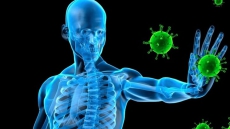
    The nervous system may play a bigger role in infections and auto-immune diseases than previously known, says a study.
     
    Learning more about that role could lead to early diagnosis and treatment of people affected by pandemics or outbreaks of contagious or deadly diseases, such as flu or Ebola, the study added.
     
    The researchers noted that neurons of the peripheral nervous system - specialised nerve cells that transmit information throughout the body - are known to send information about local infections or inflammation to the central nervous system (CNS - the brain and spinal cord) so the CNS can co-ordinate the whole body response.
     
    "The neurons may be sending the CNS not just a general 'danger warning' but specific information about whether the infection is caused by a virus or bacteria, the type of bacteria present or the nature of the auto-immune reaction," said Benjamin Steinberg from St. Michael's Hospital in Canada.
     
    "The blue sky idea is that if we know the language and can read the code, in theory we can engineer or write our own," Steinberg said.
     
    Since those messages are being sent from neurons to the CNS in real time, knowing what they are saying could speed diagnoses or prognostication of everything from the stomach flu to rheumatoid arthritis.
     
    The current method for confirming infections is to test body fluids or tissues, sometimes using invasive techniques, a process that can take hours, days or even longer.
     
    "Timely diagnosis and intervention are essential to minimize deaths and complications," Steinberg stressed.
     
    The study appeared in the New England Journal of Medicine.
    MORE Health ARTICLES

    Research offers hope for patients with cardiovascular disease

    Research offers hope for patients with cardiovascular disease
    A new research has shown a protein, which controls the growth of new blood vessels, could potentially reduce the effects of cardiovascular disease...

    Research offers hope for patients with cardiovascular disease

    Premature babies at greater risk of future hip replacements

    Premature babies at greater risk of future hip replacements
    Low birth weight and premature birth are linked to increased risk of osteoarthritis-related hip replacements in adulthood, says a research....

    Premature babies at greater risk of future hip replacements

    Nanobodies to help out in boosting immunity

    Nanobodies to help out in boosting immunity
    Targetting difficult-to-reach areas affected by disease could become a lot easier as researchers have developed a new system to make nanobodies...

    Nanobodies to help out in boosting immunity

    Cancer cell fingerprints could hasten diagnosis in kids

    Cancer cell fingerprints could hasten diagnosis in kids
    Cancers in children will be diagnosed faster and more accurately in future as researchers have identified new cancer cell fingerprints in blood....

    Cancer cell fingerprints could hasten diagnosis in kids

    Dysfunctional protein causes Alzheimer's

    Dysfunctional protein causes Alzheimer's
    Debunking a prevalent theory of Alzheimer's development, researchers have now found that it is not the amyloid-beta (A-beta) protein fragments but the...

    Dysfunctional protein causes Alzheimer's

    Speech analyser could reveal mental health

    Speech analyser could reveal mental health
    A programme that analyses speech and uses it to gain information about one's mental health is in the works....

    Speech analyser could reveal mental health