Monday, December 22, 2025
ADVT 
Health

New Alzheimer's-related memory disorder found

Darpan News Desk IANS, 14 Nov, 2014 11:09 AM
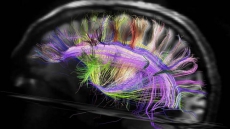
    Alzheimer's disease now has a new cousin as an international team of researchers has determined criteria for a new neurological disorder called primary age-related tauopathy (PART).
     
    Patients with PART develop memory impairment that is not at all different from those suffering from Alzheimer's disease, but they lack plaques in the brain, formed from the accumulation of amyloid protein.
     
    Amyloid plaque is the hallmark of Alzheimer's disease.
     
    "To make an Alzheimer's diagnosis you need to see two things together in a patient's brain: amyloid plaques and structures called neurofibrillary tangles composed of a protein called tau," explained Peter Nelson, a professor of neuropathology at the University of Kentucky.
     
    "However, autopsy studies have demonstrated that some patients have tangles but no plaques and we have long wondered what condition these patients had."
     
    Individuals who have tangles resembling those found in Alzheimer's but have no detectable amyloid plaques should now be classified as PART, the researchers proposed.
     
    Awareness of this neurological disease will help doctors diagnose and develop more effective treatments for patients with different types of memory impairment, they added.
     
    Until now, researchers have considered cases with only tangles to be either very early-stage Alzheimer's or a variant of the disease in which the plaques are harder to detect.
     
    In the current study, investigators from the US, Canada, Europe, and Japan came together to formalise criteria for diagnosing this new neurological disorder.
     
    PART is most severe in patients of advanced age, but is generally mild in younger elderly individuals.
     
    The study appeared in the journal Acta Neuoropathologica.
    MORE Health ARTICLES

    Canadian doctors have begun using stem cell transplants to treat 'Stiff Person Syndrome'

    Canadian doctors have begun using stem cell transplants to treat 'Stiff Person Syndrome'

    TORONTO - Canadian doctors have begun using stem cell transplants to treat "stiff person syn...

    Canadian doctors have begun using stem cell transplants to treat 'Stiff Person Syndrome'

    Can right brain rhythm create a super-perceiving human?

    Can right brain rhythm create a super-perceiving human?
    A certain type of brainwave plays a key role in our sensitivity towards touch and driving. The right brain rhythm can make people have more perceptual and attentive powers...

    Can right brain rhythm create a super-perceiving human?

    Can Ebola strike India?

    Can Ebola strike India?
    There are about 500 Indians in Guinea, 3,000 in Liberia and 1,200 in Sierra Leone, from where the maximum cases have been reported. Nigeria has a much...

    Can Ebola strike India?

    Indian scientists find a 'wonder herb' in the high Himalayas

    Indian scientists find a 'wonder herb' in the high Himalayas
    In the high hostile peaks of the Himalayas where sustaining life is a challenge in itself, Indian scientists say they have found a "wonder herb" which can regulate...

    Indian scientists find a 'wonder herb' in the high Himalayas

    Robotic walking stick for visually impaired

    Robotic walking stick for visually impaired
    In a first, engineers have designed a robotic walking stick for the visually impaired that can detect the user's immediate path and store localised geographical information...

    Robotic walking stick for visually impaired

    Genes may influence hangover chances

    Genes may influence hangover chances
    According to new research from University of Missouri-Columbia, genetic factors accounted for 45 percent of the difference in hangover frequency in women and 40 percent in men...

    Genes may influence hangover chances