Tuesday, December 23, 2025
ADVT 
Health

New Alzheimer's-related memory disorder found

Darpan News Desk IANS, 14 Nov, 2014 11:09 AM
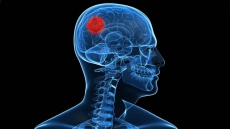
    Alzheimer's disease now has a new cousin as an international team of researchers has determined criteria for a new neurological disorder called primary age-related tauopathy (PART).
     
    Patients with PART develop memory impairment that is not at all different from those suffering from Alzheimer's disease, but they lack plaques in the brain, formed from the accumulation of amyloid protein.
     
    Amyloid plaque is the hallmark of Alzheimer's disease.
     
    "To make an Alzheimer's diagnosis you need to see two things together in a patient's brain: amyloid plaques and structures called neurofibrillary tangles composed of a protein called tau," explained Peter Nelson, a professor of neuropathology at the University of Kentucky.
     
    "However, autopsy studies have demonstrated that some patients have tangles but no plaques and we have long wondered what condition these patients had."
     
    Individuals who have tangles resembling those found in Alzheimer's but have no detectable amyloid plaques should now be classified as PART, the researchers proposed.
     
    Awareness of this neurological disease will help doctors diagnose and develop more effective treatments for patients with different types of memory impairment, they added.
     
    Until now, researchers have considered cases with only tangles to be either very early-stage Alzheimer's or a variant of the disease in which the plaques are harder to detect.
     
    In the current study, investigators from the US, Canada, Europe, and Japan came together to formalise criteria for diagnosing this new neurological disorder.
     
    PART is most severe in patients of advanced age, but is generally mild in younger elderly individuals.
     
    The study appeared in the journal Acta Neuoropathologica.
    MORE Health ARTICLES

    How brain tumours evade body's defences

    How brain tumours evade body's defences
    Brain tumours evade detection by the body's defence forces by coating their cells with extra amounts of galectin-1 protein, says a study....

    How brain tumours evade body's defences

    New technique can reduce high BP without drugs

    New technique can reduce high BP without drugs
    A new technique called mindfulness-based stress reduction (MBSR) can help people suffering from hypertension...

    New technique can reduce high BP without drugs

    Hand-held device can detect deadly skin cancer

    Hand-held device can detect deadly skin cancer
    A new hand-held device that uses lasers and sound waves may change the way doctors treat and diagnose the deadly skin cancer melanoma, says new research....

    Hand-held device can detect deadly skin cancer

    Human milk crucial for critically ill infants

    Human milk crucial for critically ill infants
    Human milk is infant food but for critically ill babies, it can also work as a medicine, says a promising research....

    Human milk crucial for critically ill infants

    Vitamin D deficiency doubles dementia, Alzeimer's risk

    Vitamin D deficiency doubles dementia, Alzeimer's risk
    In older people, not getting enough vitamin D may double the risk of developing dementia and Alzheimer's disease, says a study....

    Vitamin D deficiency doubles dementia, Alzeimer's risk

    Diabetic? Eat pistachios daily for super health

    Diabetic? Eat pistachios daily for super health
    Love pistachios? You have another reason to have these tree nuts if your sugar levels are high as eating pistachios may reduce vascular response to stress in type 2 diabetes....

    Diabetic? Eat pistachios daily for super health