Sunday, February 1, 2026
ADVT 
Health

New clue to Alzheimer's disease treatment found

Darpan News Desk IANS, 18 Sep, 2014 11:34 AM
    Researchers in Japan may have discovered the pathological mechanism of Alzheimer's disease (AD) based on phosphoproteome analysis, which would provide new clues to an effective therapy for the currently incurable disease, media reported Thursday.
     
    Comprehensive phosphoproteome analysis unravels the core signaling network that initiates the earliest synapse pathology in preclinical AD brain, said the researchers led by Kazuhiko Tagawa from Tokyo Medical and Dental University in a report published Wednesday in the online edition of Human Molecular Genetics.
     
    Using a high-end mass spectrometry, the researchers screened phosphoproteins and phosphopeptides in four types of AD mouse models and human AD postmortem brains, Xinhua reported citing Japanese news website news.mynavi.jp.
     
    "We identified commonly changed phosphoproteins in multiple models and also determined phosphoproteins related to initiation of A deposition in the mouse brain," they said.
     
    After confirming these proteins were also changed in human AD brains, the researchers put the proteins on experimentally verified protein-protein interaction databases. 
     
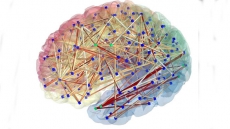
    "Surprisingly most of the core phosphoproteins were directly connected, and they formed a functional network linked to synaptic spine formation," they said.
     
    They found the change of the core network started at a preclinical stage even before histological A deposition. Systems biology analyses suggested phosphorylation of MARCKS by over-activated kinases, including PKCs and CaMKs, initiates synapse pathology.
     
    "Two-photon microscopic observation revealed recovery of abnormal spine formation in the AD model mice by targeting a core protein MARCKS or by inhibiting candidate kinases, supporting our hypothesis formulated based on phosphoproteome analysis," said the researchers.
     
    AD is the most common form of dementia. There is at present no cure for the disease, which worsens as it progresses, and eventually leads to death.

    MORE Health ARTICLES

    Toddler's eye contact may signal autism risk

    Toddler's eye contact may signal autism risk
    Low levels of joint attention - the act of making eye contact with another person to share an experience - without a positive affective component (a smile) in the...

    Toddler's eye contact may signal autism risk

    Brain next frontier to treat obesity

    Brain next frontier to treat obesity
    Therapies aimed at areas of the brain responsible for memory and learning could lead to better treatment of obesity and dementia, says a study...

    Brain next frontier to treat obesity

    About 13 percent new mothers avoid sex

    About 13 percent new mothers avoid sex
    Have you rejected love-making calls from your hubby after childbirth? Take heart as you have not committed a sin....

    About 13 percent new mothers avoid sex

    Monitor pulse after stroke to avoid second

    Monitor pulse after stroke to avoid second
    Regularly monitoring your pulse after a stroke or the pulse of a loved one who has experienced a stroke can prevent a second stroke....

    Monitor pulse after stroke to avoid second

    Condom that fights sexually-transmitted diseases

    Condom that fights sexually-transmitted diseases
    Imagine a condom that not only stops pregnancy but also kills germs that can lead to sexually transmitted diseases (STDs)....

    Condom that fights sexually-transmitted diseases

    Impulsive behaviour linked to brain connectivity

    Impulsive behaviour linked to brain connectivity
    In what could help better understand behavioural problems and social adaptation difficulties in children, researchers have found that patterns of brain connectivity...

    Impulsive behaviour linked to brain connectivity