Thursday, April 16, 2026
ADVT 
Health

New clue to Alzheimer's disease treatment found

Darpan News Desk IANS, 18 Sep, 2014 11:34 AM
    Researchers in Japan may have discovered the pathological mechanism of Alzheimer's disease (AD) based on phosphoproteome analysis, which would provide new clues to an effective therapy for the currently incurable disease, media reported Thursday.
     
    Comprehensive phosphoproteome analysis unravels the core signaling network that initiates the earliest synapse pathology in preclinical AD brain, said the researchers led by Kazuhiko Tagawa from Tokyo Medical and Dental University in a report published Wednesday in the online edition of Human Molecular Genetics.
     
    Using a high-end mass spectrometry, the researchers screened phosphoproteins and phosphopeptides in four types of AD mouse models and human AD postmortem brains, Xinhua reported citing Japanese news website news.mynavi.jp.
     
    "We identified commonly changed phosphoproteins in multiple models and also determined phosphoproteins related to initiation of A deposition in the mouse brain," they said.
     
    After confirming these proteins were also changed in human AD brains, the researchers put the proteins on experimentally verified protein-protein interaction databases. 
     
    "Surprisingly most of the core phosphoproteins were directly connected, and they formed a functional network linked to synaptic spine formation," they said.
     
    They found the change of the core network started at a preclinical stage even before histological A deposition. Systems biology analyses suggested phosphorylation of MARCKS by over-activated kinases, including PKCs and CaMKs, initiates synapse pathology.
     
    "Two-photon microscopic observation revealed recovery of abnormal spine formation in the AD model mice by targeting a core protein MARCKS or by inhibiting candidate kinases, supporting our hypothesis formulated based on phosphoproteome analysis," said the researchers.
     
    AD is the most common form of dementia. There is at present no cure for the disease, which worsens as it progresses, and eventually leads to death.


    MORE Health ARTICLES

    Prostate cancer linked with sex: Study

    Prostate cancer linked with sex: Study
    A study in the US has found that prostate cancer could be caused by a common infection passed on during intercourse, a leading English daily reported Tuesday.

    Prostate cancer linked with sex: Study

    Don't drink and swim: Drunk zebrafish shows why humans go nuts after booze

    Don't drink and swim: Drunk zebrafish shows why humans go nuts after booze
    High on booze, a zebrafish nearly doubled her speed in an experiment, leaving scientists with results that may help them find why some people on a high behave like weirdos in a party.

    Don't drink and swim: Drunk zebrafish shows why humans go nuts after booze

    E-cigarettes boost drug-resistant bacteria

    E-cigarettes boost drug-resistant bacteria
    Despite being labeled as a healthy alternative to cigarettes, e-cigarettes may increase the virulence of drug-resistant and potentially life-threatening bacteria, a study has warned.

    E-cigarettes boost drug-resistant bacteria

    Chip that precisely detects cancer early created

    Chip that precisely detects cancer early created
    What if we could diagnose cancer while it was still only affecting a few localised cells? Here comes an ultra-sensitive nano-chip that is capable of detecting cancer early.

    Chip that precisely detects cancer early created

    Yoga gets a new home in Finland

    Yoga gets a new home in Finland
    Yoga is set to get a new home in Finland when a studio is opened at the airport of this capital of the Nordic country.

    Yoga gets a new home in Finland

    Prehistoric skeleton confirms first American origins

    Prehistoric skeleton confirms first American origins
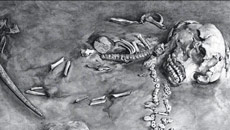
    Researchers said Thursday that they have identified a nearly complete skeleton in an underwater Mexican cave, a discovery that could help resolve a longstanding debate about the origins of the first people to inhabit the Americas.

    Prehistoric skeleton confirms first American origins