Wednesday, December 17, 2025
ADVT 
Health

New device can control heart failure

Darpan News Desk IANS, 07 Oct, 2014 10:45 AM


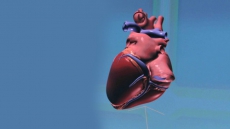
    A new, implantable device to control heart failure is showing promising results in the first trial to determine safety and effectiveness in patients, a significant study shows.
     
    "The optimal drug therapies we have today often are not enough to manage this disease for some patients, so we are always looking for new types of therapies," said lead researcher William Abraham from the Ohio State University Wexner Medical Centre in the US.
     
    The researchers examined an extra-aortic counterpulsation system called C-Pulse, made by US-based Sunshine Heart Inc.
     
    It is a cuff that wraps around the aorta and syncs with the patient's heartbeat, rapidly inflating and deflating a small balloon to help squeeze blood through the aorta to circulate throughout the body.
     
    It is powered through a wire that exits the abdomen and connects to an external driver worn by the patient.
     
    The driver can be plugged in or battery-powered.
     
    In the pilot study, 20 patients with New York Heart Association (NYHA) functional class III or ambulatory functional class IV heart failure were implanted with the device.
     
    Patients were evaluated at six months and one year. At both times, 16 of the patients showed significant improvements in NYHA functional class.
     
    "At the one year mark, three of the patients had mild or no symptoms of heart failure. They went from class III or IV down to a functional class I, effectively reversing their heart failure," Abraham noted.
     
    Additionally, patients were able to walk an average 100 feet farther during standardised measures and average quality of life scores improved nearly 30 points.
     
    The findings appeared in the Journal of American College of Cardiology Heart Failure.

    MORE Health ARTICLES

    'Revolutionary' antibiotics to tackle TB

    'Revolutionary' antibiotics to tackle TB
    Why mycobacteria - a family that includes the microbe that causes tuberculosis (TB) - survive oxygen limitation has long been a mystery but not any more....

    'Revolutionary' antibiotics to tackle TB

    'Simulated' human heart created for better drug testing

    'Simulated' human heart created for better drug testing
    In pioneering research, a scientist has developed a 'simulated' human heart to test the effect of drugs on the heart without using human or animal trials....

    'Simulated' human heart created for better drug testing

    Avian influenza treatments identified

    Avian influenza treatments identified
    In a novel discovery, scientists have identified six potential therapeutics to treat the deadly H7N9 avian influenza...

    Avian influenza treatments identified

    Genes play key role in twins' language deficit

    Genes play key role in twins' language deficit
    Contrary to the popular tendency to attribute delays in early language acquisition of twins to mothers, researchers have found that genes play a significant role in...

    Genes play key role in twins' language deficit

    Scaling up HIV therapy can end this epidemic by 2030: UNAIDS

    Scaling up HIV therapy can end this epidemic by 2030: UNAIDS
    The opening session of the 20th International AIDS Conference (AIDS 2014) began here Sunday with tributes being paid to the six delegates who...

    Scaling up HIV therapy can end this epidemic by 2030: UNAIDS

    Gene behind benign breast tumours identified

    Gene behind benign breast tumours identified
    Researchers have identified a critical gene that could help clinicians distinguish fibroadenomas cases from breast cancer. Fibroadenomas is the most...

    Gene behind benign breast tumours identified