Saturday, December 20, 2025
ADVT 
Health

New device can control heart failure

Darpan News Desk IANS, 07 Oct, 2014 10:45 AM


    A new, implantable device to control heart failure is showing promising results in the first trial to determine safety and effectiveness in patients, a significant study shows.
     
    "The optimal drug therapies we have today often are not enough to manage this disease for some patients, so we are always looking for new types of therapies," said lead researcher William Abraham from the Ohio State University Wexner Medical Centre in the US.
     
    The researchers examined an extra-aortic counterpulsation system called C-Pulse, made by US-based Sunshine Heart Inc.
     
    It is a cuff that wraps around the aorta and syncs with the patient's heartbeat, rapidly inflating and deflating a small balloon to help squeeze blood through the aorta to circulate throughout the body.
     
    It is powered through a wire that exits the abdomen and connects to an external driver worn by the patient.
     
    The driver can be plugged in or battery-powered.
     
    In the pilot study, 20 patients with New York Heart Association (NYHA) functional class III or ambulatory functional class IV heart failure were implanted with the device.
     
    Patients were evaluated at six months and one year. At both times, 16 of the patients showed significant improvements in NYHA functional class.
     
    "At the one year mark, three of the patients had mild or no symptoms of heart failure. They went from class III or IV down to a functional class I, effectively reversing their heart failure," Abraham noted.
     
    Additionally, patients were able to walk an average 100 feet farther during standardised measures and average quality of life scores improved nearly 30 points.
     
    The findings appeared in the Journal of American College of Cardiology Heart Failure.
    MORE Health ARTICLES

    Don't drink and swim: Drunk zebrafish shows why humans go nuts after booze

    Don't drink and swim: Drunk zebrafish shows why humans go nuts after booze
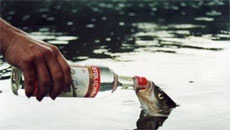
    High on booze, a zebrafish nearly doubled her speed in an experiment, leaving scientists with results that may help them find why some people on a high behave like weirdos in a party.

    Don't drink and swim: Drunk zebrafish shows why humans go nuts after booze

    E-cigarettes boost drug-resistant bacteria

    E-cigarettes boost drug-resistant bacteria
    Despite being labeled as a healthy alternative to cigarettes, e-cigarettes may increase the virulence of drug-resistant and potentially life-threatening bacteria, a study has warned.

    E-cigarettes boost drug-resistant bacteria

    Chip that precisely detects cancer early created

    Chip that precisely detects cancer early created
    What if we could diagnose cancer while it was still only affecting a few localised cells? Here comes an ultra-sensitive nano-chip that is capable of detecting cancer early.

    Chip that precisely detects cancer early created

    Yoga gets a new home in Finland

    Yoga gets a new home in Finland
    Yoga is set to get a new home in Finland when a studio is opened at the airport of this capital of the Nordic country.

    Yoga gets a new home in Finland

    Prehistoric skeleton confirms first American origins

    Prehistoric skeleton confirms first American origins
    Researchers said Thursday that they have identified a nearly complete skeleton in an underwater Mexican cave, a discovery that could help resolve a longstanding debate about the origins of the first people to inhabit the Americas.

    Prehistoric skeleton confirms first American origins

    Autism risk higher among kids with parents in technical jobs

    Autism risk higher among kids with parents in technical jobs
    Children of parents who are in technical occupations are more likely to have an autism spectrum disorder (ASD) and a more serious form of autism, a study suggested.

    Autism risk higher among kids with parents in technical jobs