Thursday, January 1, 2026
ADVT 
Health

New drug could transform leukaemia treatment

Darpan News Desk IANS, 08 Dec, 2014 11:58 AM
    A new type of cancer therapy has produced dramatic results in patients with advanced leukaemia in an early-phase clinical trial.
     
    Approximately 15 percent of acute myeloid leukemia patients have a mutated form of the IDH2 gene.
     
    This mutation prevents immature white blood cells from developing into healthy, infection-fighting cells which accumulate, crowd out normal cells, and lead to the development of acute leukaemia.
     
    AG-221 is an investigational drug that blocks the mutated IDH2 protein, effectively allowing these immature white blood cells to develop normally.
     
    "This drug has the potential to transform the treatment of leukemia," said lead study author Eytan M. Stein, medical oncologist at the Memorial Sloan Kettering Cancer Center in the US.
     
    "We have not yet reached the maximum tolerated dose and patients are responding dramatically. More research is needed, but I am optimistic that this drug will fundamentally alter the natural history of IDH2-mutant leukemia and other hematologic malignancies," Stein added.
     
    Instead of inhibiting a mutation that leads to cancer cell growth, the new drug works by targeting a gene that can transform cells into becoming healthy again.
     
    As part of the study, 45 patients with IDH2-positive leukaemia or haematologic malignancies were able to complete one cycle of therapy and were evaluated for efficacy.
     
    All patients had advanced disease that had relapsed or was unresponsive to prior therapy.
     
    Patients received up to 150 mg or 200 mg of AG-221 once or twice daily in 28-day cycles.
     
    The overall response rate was 56 percent; 15 patients (33 percent) achieved complete remission and 10 patients (22 percent) partial remission.
     
    The condition of 17 patients (38 percent) became stable.
     
    There were no treatment-related deaths.
     
    The findings were presented at the 56th annual meeting of the American Society of Hematology.

    MORE Health ARTICLES

    Alcohol, drugs together put kids at higher driving risk

    Alcohol, drugs together put kids at higher driving risk
    Teenagers who drink alcohol and smoke marijuana together may be at increased risk for unsafe driving, a study shows.

    Alcohol, drugs together put kids at higher driving risk

    New diabetes, obesity drug: Indian-American's promising research

    New diabetes, obesity drug: Indian-American's promising research
    Two researchers at Indiana University, including an Indian-American, are leading the way towards developing a new potential non-insulin drug for diabetes and obesity, which needs to be taken only once a week.

    New diabetes, obesity drug: Indian-American's promising research

    Build super muscles with soy-dairy protein

    Build super muscles with soy-dairy protein
    Not happy with gym results on your muscles? Try a blend of soy and dairy proteins after resistance exercises as this has now been touted as the best way to build muscle mass.

    Build super muscles with soy-dairy protein

    'Love hormone' bonds animals like humans

    'Love hormone' bonds animals like humans
    And you thought you had a patent on 'love hormone' when it comes to showing affection! Dogs too have oxytocin and release it in a good quantity when in love or looking for bonding.

    'Love hormone' bonds animals like humans

    Can you believe it? Metabolism existed even before origin of life, reveales study

    Can you believe it? Metabolism existed even before origin of life, reveales study
    The mystery behind how the first organisms on earth could have become metabolically active has been unlocked.

    Can you believe it? Metabolism existed even before origin of life, reveales study

    Fly's genome study offers hope for sleeping sickness

    Fly's genome study offers hope for sleeping sickness
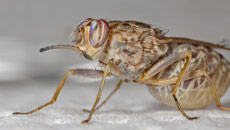
    With genome decoding of tsetse fly that causes the potentially fatal sleeping sickness disease, scientists have discovered new clues to the diet, vision and reproductive strategies of the insect.

    Fly's genome study offers hope for sleeping sickness