Sunday, December 28, 2025
ADVT 
Health

New test for early cancer detection

Darpan News Desk IANS, 01 Oct, 2014 10:08 AM
    Early detection of cancer could now be as easy as a simple blood test.
     
    Researchers have found that this test may also eliminate the need for some types of biopsies and identify those more likely to develop cancer in the future.
     
    The test, called the "lymphocyte genome sensitivity" (LGS) test, could detect some cancers earlier than ever before, the study noted.
     
    "The test could allow earlier cancer detection, helping to save people's lives," said co-researcher Diana Anderson from University of Bradford in West Yorkshire, UK.
     
    To develop this test, the researchers took blood samples from a group of people that included healthy individuals, cancer patients and people believed to be at a higher risk than normal to develop cancer. 
     
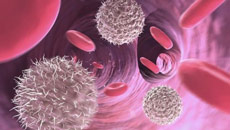
    White blood cells (lymphocytes) in these samples were examined in a "comet test," by embedding the cells in a jelly-like substance, called agar, on a microscope slide. 
     
    In this test, damage to the genetic material (DNA) of the cells was caused by treatment with ultraviolet (UVA) light. 
     
    This damage was observed in the form of DNA pieces being pulled within the agar in an electric field toward the positive end of the field.
     
    This caused a comet-like tail, and the longer the tail the more DNA damage. 
     
    In cancer patients, DNA-damaged tail responses remained high and in those people who might develop pre-cancerous diseases, tail responses were in between. 
     
    This means that people with cancer have DNA which is more easily damaged by UVA than other people, so the test shows the sensitivity to damage of all the genome in a cell. 
     
    The study appeared in The FASEB Journal.

    MORE Health ARTICLES

    'Nuclear winter' wiped out dinosaurs 66 mn years ago: Study

    'Nuclear winter' wiped out dinosaurs 66 mn years ago: Study
    In a first physical evidence that a sudden dip in temperatures wiped out dinosaurs, a team of scientists has revealed that a massive asteroid hit the earth 66 million years ago, causing “nuclear winter” and the ultimate demise of giant animals.

    'Nuclear winter' wiped out dinosaurs 66 mn years ago: Study

    Soon, corns to grow in caves, mines

    Soon, corns to grow in caves, mines
    In view of growing concerns about genetically modified crops cross-contaminating other crops, scientists have now devised a way to grow dwarf corn stalks in caves and abandoned mines without affecting their yield.

    Soon, corns to grow in caves, mines

    Want to live long? Aim big in life

    Want to live long? Aim big in life
    Some may call you crazy if you reveal your lofty dreams and what you want to achieve in your life, but sooner you find a purpose in life, greater are your chances of living longer.

    Want to live long? Aim big in life

    Living heart tissue grown

    Living heart tissue grown
    In a first, scientists have merged stem cell and 'organ-on-a-chip' technologies to grow functioning human heart tissue carrying an inherited cardiovascular disease.

    Living heart tissue grown

    Insects in the frying pan! Take a bite

    Insects in the frying pan! Take a bite
    Ever fancied eating insects for lunch? A whole lot of people in the world, especially the impoverished parts, do it. Now it is your turn.

    Insects in the frying pan! Take a bite

    How your immune system can fight back cancer

    How your immune system can fight back cancer
    In a groundbreaking treatment, researchers at the National Cancer Institute in the US have harnessed a female patient's own immune system to fight cancer.

    How your immune system can fight back cancer