Monday, March 30, 2026
ADVT 
Health

New UBC Study Finds HIV Treatment Could Contribute To Syphilis Outbreak

The Canadian Press, 17 Jan, 2017 10:33 AM
    VANCOUVER — Researchers at the University of British Columbia say a drug treatment that is key to the successful fight against HIV infection could leave patients prone to other diseases, such as syphilis.
     
    The study says drugs used to treat HIV could affect how the body responds to syphilis, inadvertently contributing to an outbreak reported in several countries, primarily affecting men having sex with men.
     
    Past research has speculated new, highly effective HIV treatments had encouraged more high-risk sexual behaviour.
     
    But a release from the university says Michael Rekart, clinical professor in UBC's school of population and public health, noted huge gaps between cases of syphilis and other sexually transmitted infections such as gonorrhea.
     
    The UBC team noticed that even though new syphilis cases are commonly observed in patients receiving the most effective HIV medication known as highly active antiretroviral therapy, or HAART, mathematical models ruled out risky sexual behaviour as a contributing factor in outbreaks.
     
    Team member and University of Victoria microbiologist Caroline Cameron say the research suggests biological explanations for the effects of specific HIV drugs on the body's immune response to certain diseases.
     
    The findings should be examined more closely, Rekart says, adding that it's vital for HIV patients to continue to take the most effective medications.
     
    "HAART drugs are life-saving; syphilis is curable," he says. "HAART drugs bring people with HIV back to a normal state of immunity, they can have a normal life, they don't get most opportunistic infections such as tuberculosis."
     
    Researchers say the next step is to carefully look at HIV drugs and determine if any within the highly active antiretroviral therapy could impair immunity. 
     
    The research was published Monday in the international journal, Sexually Transmitted Infections.
    MORE Health ARTICLES

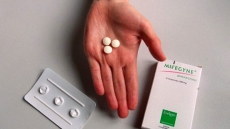
    Abortion Pill RU-486 Approved By Health Canada After 2 1/2 Year Review

    Abortion Pill RU-486 Approved By Health Canada After 2 1/2 Year Review
     Women will need to obtain a prescription from a doctor to purchase the drug.

    Abortion Pill RU-486 Approved By Health Canada After 2 1/2 Year Review

    Diabetic? Don't Skip Breakfast

    Diabetic? Don't Skip Breakfast
    Fasting until noon triggers major blood sugar spikes and impairs the insulin responses of Type-2 diabetics throughout the rest of the day, the researchers said.

    Diabetic? Don't Skip Breakfast

    Love Drinking? Raise A Toast To Moderation

    Love Drinking? Raise A Toast To Moderation
    Have you heard of "Holiday Heart Syndrome"? It happens when a non-drinker or a light drinker gives in to the weekend party mood and goes on a drinking spree.

    Love Drinking? Raise A Toast To Moderation

    South Asians In US Reluctant To Report Pain

    South Asians In US Reluctant To Report Pain
    South Asians living in the US are more reluctant than other ethnicities to report pain as well as seek medication to treat the pain they experience near the end of their lives, says a new study led by an Indian-origin researcher.

    South Asians In US Reluctant To Report Pain

    South Asians In US More Prone To Heart Attacks, Diabetes

    South Asians In US More Prone To Heart Attacks, Diabetes
    South Asians in US are more prone to heart attacks and diabetes when compared to other ethnic groups, it was highlighted at a health congress here.

    South Asians In US More Prone To Heart Attacks, Diabetes

    As More Canadians Survive Strokes, More Live With Stroke-induced Disabilities

    As More Canadians Survive Strokes, More Live With Stroke-induced Disabilities
    More people are surviving strokes — a good news story about what can be a devastating and even fatal attack on the brain.

    As More Canadians Survive Strokes, More Live With Stroke-induced Disabilities