Tuesday, February 3, 2026
ADVT 
Health

Night Owls More Likely To Have Higher Body Fat And At Greater Diabetes Risk

Darpan News Desk IANS, 02 Apr, 2015 01:16 PM
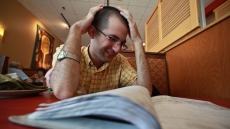
    Love to watch late-night TV or chat with your girlfriend till the wee hours? You may run a greater risk of developing diabetes than early risers despite getting equal amount of sleep, a new study warns.
     
    The study published in the Journal of Clinical Endocrinology & Metabolism examined the difference between night and morning chronotypes, or a person's natural sleep-wake cycle.
     
    Besides diabetes, night owls, people who stay up late and get up late in the morning, are also more likely to develop metabolic syndrome and sarcopenia - gradual loss of muscle mass - than early risers, the findings showed.
     
    Staying awake till late night is likely to cause sleep loss, poor sleep quality, and eating at inappropriate times, which might eventually lead to metabolic change, the researchers noted.
     
    "Regardless of lifestyle, people who stayed up late faced a higher risk of developing health problems like diabetes or reduced muscle mass than those who were early risers," said one of the study's authors Nan Hee Kim from the Korea University College of Medicine in Ansan, South Korea.
     
    "This could be caused by night owls' tendency to have poorer sleep quality and to engage in unhealthy behaviours like smoking, late-night eating and a sedentary lifestyle," Kim said.
     
    The study examined sleeping habits and metabolism in 1,620 participants in the population-based cohort Korean Genome Epidemiology Study (KoGES).
     
    The study participants were between the ages of 47 and 59.
     
    Even though the evening chronotypes tended to be younger, they had higher levels of body fat and triglycerides, or fats in the blood, than morning chronotypes.
     
    Night owls also were more likely to have sarcopenia, a condition where the body gradually loses muscle mass.
     
    Men who were evening chronotypes were more likely have diabetes or sarcopenia than early risers.
     
    Among women, night owls tended to have more belly fat and a great risk of metabolic syndrome, a cluster of risk facts that raise the risk of heart disease, stroke and diabetes.
    MORE Health ARTICLES

    Not all mosquitoes can transmit malaria

    Not all mosquitoes can transmit malaria
    A genetic study has revealed that certain species of mosquitoes have evolved to better transmit malaria than even some of their close cousins....

    Not all mosquitoes can transmit malaria

    Mechanism linked to stroke damage identified

    Mechanism linked to stroke damage identified
    Researchers have discovered the mechanism linked to stroke damage and brain function, thus paving the way to develop a new drug target to block brain damage....

    Mechanism linked to stroke damage identified

    Ebola virus detected in semen three months after symptoms end

    Ebola virus detected in semen three months after symptoms end
    The World Health Organisation (WHO) warned Friday that the semen of men recovering from Ebola can contain the deadly virus up to three months after the symptoms disappear...

    Ebola virus detected in semen three months after symptoms end

    Gateway to human memory in brain identified

    Gateway to human memory in brain identified
    An international team has successfully determined with a level of precision never achieved before the location in the brain where memories are generated....

    Gateway to human memory in brain identified

    Bitter wild fruits can help treat cancer

    Bitter wild fruits can help treat cancer
    The compounds that give bitter flavour to wild cucurbits - cucumber, pumpkin, melon, watermelon and squash - have the potential to treat cancer and...

    Bitter wild fruits can help treat cancer

    Why autistic people see faces differently

    Why autistic people see faces differently
    People with autism spectrum disorder (ASD) gain different perceptions from peoples' faces as the way they gather information - not the judgement process itself ...

    Why autistic people see faces differently