Sunday, July 5, 2026
ADVT 
Health

No link between wearing bra and breast cancer: Study

Darpan News Desk IANS, 05 Sep, 2014 11:55 AM
    There is no association between bra wearing and increased breast cancer risk among post-menopausal women, according to new research.
     
    "There have been some concerns that one of the reasons why breast cancer may be more common in developed countries compared with developing countries is differences in bra-wearing patterns," said Lu Chen, a doctoral student in the department of epidemiology at the University of Washington's School of Public Health.
     
    The study found no evidence that wearing a bra increases a woman's risk of breast cancer.
     
    "The risk was similar no matter how many hours per day women wore a bra, whether they wore a bra with an underwire, or at what age they first began wearing a bra," Chen added.
     
    Study participants were 454 women with invasive ductal carcinoma (IDC) and 590 women with invasive lobular carcinoma (ILC), the two most common subtypes of breast cancer. All women were post-menopausal, aged 55 to 74.
     
    Researchers asked them a series of structured questions to assess lifetime patterns of bra wearing.
     
    Questions included the age at which the study participant started wearing a bra, whether she wore a bra with an underwire, her bra cup size and band size, the number of hours per day and number of days per week she wore a bra, and if her bra-wearing patterns ever changed at different times in her life.
     
    No aspect of wearing a bra was associated with an increased risk for either IDC or ILC, they found.
     
    "The findings provide reassurance to women that wearing a bra does not appear to increase the risk for the most common histological types of post-menopausal breast cancer," the authors noted.
     
    The paper appeared in the journal Cancer Epidemiology, Biomarkers and Prevention.

    MORE Health ARTICLES

    Can you believe it? Metabolism existed even before origin of life, reveales study

    Can you believe it? Metabolism existed even before origin of life, reveales study
    The mystery behind how the first organisms on earth could have become metabolically active has been unlocked.

    Can you believe it? Metabolism existed even before origin of life, reveales study

    Fly's genome study offers hope for sleeping sickness

    Fly's genome study offers hope for sleeping sickness
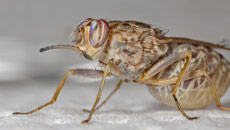
    With genome decoding of tsetse fly that causes the potentially fatal sleeping sickness disease, scientists have discovered new clues to the diet, vision and reproductive strategies of the insect.

    Fly's genome study offers hope for sleeping sickness

    Technology to catch dozing drivers on the go

    Technology to catch dozing drivers on the go
    Long rides at night can now become a lot more pleasant and safe if you listen to researchers who have developed an inexpensive and easier way to find out when the person behind the wheel is about to nod off.

    Technology to catch dozing drivers on the go

    Astronauts may face attention deficit risks

    Astronauts may face attention deficit risks
    Astronauts who are radiation-sensitive need to take extra care to protect their brains as they may face risks of attention deficit and slower reaction times, a study suggests.

    Astronauts may face attention deficit risks

    Befriend a cyber buddy to stay motivated

    Befriend a cyber buddy to stay motivated
    Although a human partner is a better motivator during exercise, a software-generated cyber partner can also be effective in making you work a little extra, research reveals.

    Befriend a cyber buddy to stay motivated

    New method to treat cocaine addiction effectively

    New method to treat cocaine addiction effectively
    There is hardly any effective medications for cocaine addiction, but researchers have now discovered a new compound that can halt cocaine addiction, raising hope for new treatment for drug addicts.

    New method to treat cocaine addiction effectively