Saturday, February 7, 2026
ADVT 
Health

Not all mosquitoes can transmit malaria

Darpan News Desk IANS, 28 Nov, 2014 12:46 PM
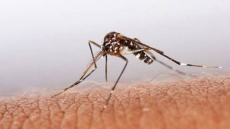
    A genetic study has revealed that certain species of mosquitoes have evolved to better transmit malaria than even some of their close cousins.
     
    The study may advance understanding about the biological differences between mosquitoes that transmit malaria, and ultimately, how species might be more precisely controlled to stop transmission.
     
    "With the availability of genome sequences from Anopheles mosquitoes of divergent lineages, we now have the opportunity to significantly improve our understanding of these important malaria vectors and develop new strategies to combat malaria and other mosquito-borne diseases," explained Zhijian Tu, professor at Virginia Polytechnic Institute and State University.
     
    Of about 450 different species of mosquitoes in the Anopheles genus, only about 60 can transmit the Plasmodium malaria parasite that is harmful to people.
     
    The team chose 16 mosquito species that are currently found in Africa, Asia, Europe, and Latin America, but evolved from the same ancestor approximately 100 million years ago.
     
    Today, the 16 species have varying capabilities for transmitting malaria and adapting to new environments.
     
    The researchers sequenced their genomes to better understand the evolutionary science behind the differences.
     
    In a second related study, researchers found that the most dangerous species, Anopheles gambiae, is able to increase its transmission capabilities by swapping genes at the chromosome level.
     
    A genetic process called introgression, where genes from one species flow into another, plays a role in evolution, in this case by enhancing the capacity of mosquitoes to transmit the malaria parasite, the findings suggested.
     
    The research in the second paper was led by Matthew Hahn, professor at Indiana University.
     
    Both the studies appeared in the journal Science.

    MORE Health ARTICLES

    Sleep disturbances linked to higher Alzheimer's risk in men

    Sleep disturbances linked to higher Alzheimer's risk in men
    Elderly men with self-reported sleep disturbances run a higher risk of developing Alzheimer's disease than men without self-reported sleep disturbances, says a study....

    Sleep disturbances linked to higher Alzheimer's risk in men

    How body clock governs female fertility

    How body clock governs female fertility
    Treating infertility in women may soon have a new approach as researchers have now identified the biological clock that governs female fertility....

    How body clock governs female fertility

    Google scientists to find 'hidden' cancer via nanoparticles

    Google scientists to find 'hidden' cancer via nanoparticles
    In a pioneering research, a Google life sciences team - which has two senior Indian-origin researchers - is set to find signs of deadly diseases...

    Google scientists to find 'hidden' cancer via nanoparticles

    Vitamin D can curb asthma attacks

    Vitamin D can curb asthma attacks
    Boosting Vitamin D levels in deficient asthmatics could help manage asthma flare-ups, Israeli researchers have found....

    Vitamin D can curb asthma attacks

    Text messages can help fight malaria

    Text messages can help fight malaria
    Simple and short text message reminders to take malaria medication can help in the fight against the disease by boosting the rates at...

    Text messages can help fight malaria

    Hair disorder could signal dental decay

    Hair disorder could signal dental decay
    If you are experiencing hair fall problems, your teeth may require extra care as researchers have found that hair disorder could increase risk of dental decay....

    Hair disorder could signal dental decay