Tuesday, February 10, 2026
ADVT 
Health

Not all mosquitoes can transmit malaria

Darpan News Desk IANS, 28 Nov, 2014 12:46 PM
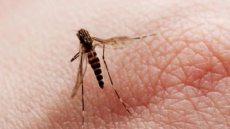
    A genetic study has revealed that certain species of mosquitoes have evolved to better transmit malaria than even some of their close cousins.
     
    The study may advance understanding about the biological differences between mosquitoes that transmit malaria, and ultimately, how species might be more precisely controlled to stop transmission.
     
    "With the availability of genome sequences from Anopheles mosquitoes of divergent lineages, we now have the opportunity to significantly improve our understanding of these important malaria vectors and develop new strategies to combat malaria and other mosquito-borne diseases," explained Zhijian Tu, professor at Virginia Polytechnic Institute and State University.
     
    Of about 450 different species of mosquitoes in the Anopheles genus, only about 60 can transmit the Plasmodium malaria parasite that is harmful to people.
     
    The team chose 16 mosquito species that are currently found in Africa, Asia, Europe, and Latin America, but evolved from the same ancestor approximately 100 million years ago.
     
    Today, the 16 species have varying capabilities for transmitting malaria and adapting to new environments.
     
    The researchers sequenced their genomes to better understand the evolutionary science behind the differences.
     
    In a second related study, researchers found that the most dangerous species, Anopheles gambiae, is able to increase its transmission capabilities by swapping genes at the chromosome level.
     
    A genetic process called introgression, where genes from one species flow into another, plays a role in evolution, in this case by enhancing the capacity of mosquitoes to transmit the malaria parasite, the findings suggested.
     
    The research in the second paper was led by Matthew Hahn, professor at Indiana University.
     
    Both the studies appeared in the journal Science.

    MORE Health ARTICLES

    Virus linked to obesity and diabetes found

    Virus linked to obesity and diabetes found
    Biologists have discovered an extremely widespread virus that could be as old as humans and could play a major role in obesity and diabetes...

    Virus linked to obesity and diabetes found

    Men in shift work at higher type 2 diabetes risk: Study

    Men in shift work at higher type 2 diabetes risk: Study
    The reasons for this finding are not clear, say the authors, but suggest that men working shift patterns might need to pay more attention to the possible health...

    Men in shift work at higher type 2 diabetes risk: Study

    How malaria parasite resists key trial drug

    How malaria parasite resists key trial drug
    Researchers have uncovered a way the malaria parasite becomes resistant to a key clinical trial drug....

    How malaria parasite resists key trial drug

    Immune response to injury may damage brain: Study

    Immune response to injury may damage brain: Study
    Can our immune system trigger memory impairment and cognitive dysfunction leading to chronic neurological diseases? Researchers at Cleveland Clinic in Ohio believe so....

    Immune response to injury may damage brain: Study

    Common blood thinner futile for pregnant women: study

    Common blood thinner futile for pregnant women: study
    A daily injection of blood thinner for pregnant women at risk of developing blood clots in their veins - a condition called thrombophilia - has been found...

    Common blood thinner futile for pregnant women: study

    Job loss, not recession, ups death risk

    Job loss, not recession, ups death risk

    If we believe US researchers, job loss is associated with a 73 percent increase in the probabilit...

    Job loss, not recession, ups death risk