Saturday, December 6, 2025
ADVT 
Health

Overweight Teens Are 80% More Likely To Suffer A Stroke In Adulthood

IANS, 01 Jul, 2017 12:13 AM
    Parents please take note! If your son becomes overweight during his teenage years then he is 80 percent more likely to have a stroke in adulthood, warns a study.
     
     
    A findings revealed that men with excessive BMI increase from childhood to age 20 had a higher risk of stroke than those with average BMI increase. For every two-point increase in BMI, men were 20 percent more likely to have a stroke.
     
     
    Men, who were overweight at both time points, were 70 percent more likely to have a stroke. Of the 990 people in this group, 36 had a stroke, or 3.6 percent.
     
     
    Study author Jenny M. Kindblom from the University of Gothenburg in Sweden said that the stroke rate has been increasing among young adults even while it has been decreasing for older people.
     
     
    Kindblom added that it has occurred at the same time as the obesity epidemic.
     
     
    The team analysed 37,669 Swedish men whose body mass index (BMI) was measured at age eight and again at age 20.


    From age 20, they were followed for an average of 38 years and the results revealed that during that time, 918 men had strokes.
     
     
    Men, who were normal weight at age 8 but overweight at age 20, were 80 percent more likely to have a stroke. Of the 1,800 in this group, 67 had a stroke, or 3.7 percent.
     
     
    Kindblom noted that the study was observational and does not prove that the increase in BMI causes the increase in stroke, rather it just shows the association.
     
     
    The study also found that people with high increases in BMI from age 8 to age 20 also were more likely to have high blood pressure as adults.
     
     
    People with high blood pressure are more likely to have stroke.
     
     
    The research was published in online journal of Neurology
    MORE Health ARTICLES

    Paralyzed Man Feels Touch Through Mind-Controlled Robot Hand

    Paralyzed Man Feels Touch Through Mind-Controlled Robot Hand
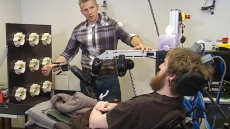
      How it works: Tiny chips implanted in Nathan Copeland's brain are bypassing his broken spinal cord, relaying electrical signals that govern movement and sensation to and from that robotic arm.

    Paralyzed Man Feels Touch Through Mind-Controlled Robot Hand

    Study Questions Value Of Mammograms, Breast Cancer Screening

    Study Questions Value Of Mammograms, Breast Cancer Screening
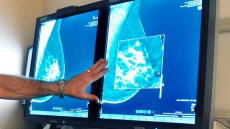
    A new study questions the value of mammograms for breast cancer screening. It concludes that a woman is more likely to be diagnosed with a small tumour that is not destined to grow than she is to have a true problem spotted early.

    Study Questions Value Of Mammograms, Breast Cancer Screening

    Beware Extremes: Exercise, Anger May Trigger Heart Attack

    If you're angry or upset, you might want to simmer down before heading out for an intense run or gym workout. A large, international study ties heavy exertion while stressed or mad to a tripled risk of having a heart attack within an hour.

    Beware Extremes: Exercise, Anger May Trigger Heart Attack

    Good Heart Attack Care Could Add A Year To Your Life

    Going to the right hospital for heart attack care could add a year to your life, a new study suggests.

    Good Heart Attack Care Could Add A Year To Your Life

    Sex After Baby: New Study Offers Surprising Finding About New Fathers

    Sex After Baby: New Study Offers Surprising Finding About New Fathers
    New Canadian study that explores the sex lives of first-time parents has produced a surprising finding that could serve as a caution to well-meaning fathers.

    Sex After Baby: New Study Offers Surprising Finding About New Fathers

    Crowdsourcing Effort Takes Aim At Deadliest Breast Cancers

    CHICAGO — Forget the pink ribbons. Spitting in a tube for science is what unites a growing group of breast cancer patients taking part in a unique project to advance treatment for the deadliest form of the disease.

    Crowdsourcing Effort Takes Aim At Deadliest Breast Cancers