Sunday, December 28, 2025
ADVT 
Health

Parkinson's disease progression may be reversed

Darpan News Desk IANS, 16 Oct, 2014 10:57 AM
    Certain drugs can help reverse the effects caused by Parkinson's disease, a study on fruit flies shows.
     
    Mutations in a gene called LRRK2 carry a well-established risk for Parkinson's disease.
     
    The substances called deacetylase inhibitors could fully restore movement problems observed in fruit flies carrying the LRRK2 mutation.
     
    These drugs target the transport system and reverse the defects caused by the faulty LRRK2 within nerve cells.
     
    "Our study provides compelling evidence that there is a direct link between defective transport within nerve cells and movement problems caused by the LRRK2 Parkinson's mutation in flies," said lead researcher Kurt De Vos from the University of Sheffield in Britain.
     
    "We could also show that these neuronal transport defects caused by the LRRK2 mutation are reversible," added co-investigator Alex Whitworth.
     
    By targeting the transport system with drugs, the researcher could not only prevent movement problems, but also fully restore movement abilities in fruit flies.
     
    The LRRK2 gene produces a protein that affects many processes in the cell.
     
    It is known to bind to microtubules, the cells' transport tracks.
     
    A defect in this transport system has been suggested to contribute to Parkinson's disease.
     
    The researchers investigated this link and found that LRRK2 mutations affect transport in nerve cells which lead to movement problems observed in the fruit fly (Drosophila).
     
    "This research gives hope that for people with a particular mutation in their genes, it may one day be possible to intervene and stop the progression of Parkinson's," concluded Beckie Port, research communications officer at Parkinson's UK.
     
    The study appeared in the journal Nature Communications.

    MORE Health ARTICLES

    Build super muscles with soy-dairy protein

    Build super muscles with soy-dairy protein
    Not happy with gym results on your muscles? Try a blend of soy and dairy proteins after resistance exercises as this has now been touted as the best way to build muscle mass.

    Build super muscles with soy-dairy protein

    'Love hormone' bonds animals like humans

    'Love hormone' bonds animals like humans
    And you thought you had a patent on 'love hormone' when it comes to showing affection! Dogs too have oxytocin and release it in a good quantity when in love or looking for bonding.

    'Love hormone' bonds animals like humans

    Can you believe it? Metabolism existed even before origin of life, reveales study

    Can you believe it? Metabolism existed even before origin of life, reveales study
    The mystery behind how the first organisms on earth could have become metabolically active has been unlocked.

    Can you believe it? Metabolism existed even before origin of life, reveales study

    Fly's genome study offers hope for sleeping sickness

    Fly's genome study offers hope for sleeping sickness
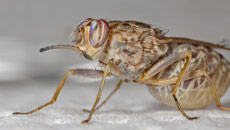
    With genome decoding of tsetse fly that causes the potentially fatal sleeping sickness disease, scientists have discovered new clues to the diet, vision and reproductive strategies of the insect.

    Fly's genome study offers hope for sleeping sickness

    Technology to catch dozing drivers on the go

    Technology to catch dozing drivers on the go
    Long rides at night can now become a lot more pleasant and safe if you listen to researchers who have developed an inexpensive and easier way to find out when the person behind the wheel is about to nod off.

    Technology to catch dozing drivers on the go

    Astronauts may face attention deficit risks

    Astronauts may face attention deficit risks
    Astronauts who are radiation-sensitive need to take extra care to protect their brains as they may face risks of attention deficit and slower reaction times, a study suggests.

    Astronauts may face attention deficit risks