Monday, February 9, 2026
ADVT 
Health

Plant cells may help treat hemophilia

Darpan News Desk IANS, 06 Sep, 2014 08:59 AM
    Treating hemophilia, a rare bleeding disorder in which the blood does not clot normally, could be a lot cheaper and much safer as researchers have developed a way to use plant cells to treat it.
     
    "This is a major step forward," said study co-author Roland Herzog, College of Medicine, from the University of Florida in the US.
     
    Patients with hemophilia bleed for a longer time than others after an injury as they lack the necessary proteins, which help in clotting, in their blood to stem the flow from a wound.
     
    People with severe hemophilia typically receive regular injections of these proteins, called clotting factors, as a treatment for the disease.
     
    But up to 30 percent of people afflicted with the most common form, hemophilia A, develop antibodies (inhibitors) that attack these lifesaving proteins, making it difficult to prevent or treat excessive bleeding.
     
    "Our technique, which uses plant-based capsules, has the potential to be a cost-effective and safe alternative," said co-author Henry Daniell from the University of Pennsylvania School of Dental Medicine in the US.
     
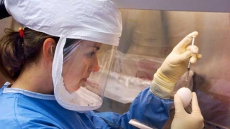
    The researchers had developed a platform for delivering drugs and bio-therapeutics using genetically modified plants to express proteins.
     
    Using a combination of factor VIII DNA and another substance that can safely cross the intestinal walls and enter the bloodstream, the researchers fused the genes into tobacco plants.
     
    The team fed the resulting plant solution to mice with hemophilia.
     
    The mice fed the experimental plant material formed fewer inhibitors - on average, seven times fewer.
     
    For human use, the goal would be to use lettuce plants instead of tobacco plants, the researchers said.
     
    The study appeared in the journal Blood.

    MORE Health ARTICLES

    'Simulated' human heart created for better drug testing

    'Simulated' human heart created for better drug testing
    In pioneering research, a scientist has developed a 'simulated' human heart to test the effect of drugs on the heart without using human or animal trials....

    'Simulated' human heart created for better drug testing

    Avian influenza treatments identified

    Avian influenza treatments identified
    In a novel discovery, scientists have identified six potential therapeutics to treat the deadly H7N9 avian influenza...

    Avian influenza treatments identified

    Genes play key role in twins' language deficit

    Genes play key role in twins' language deficit
    Contrary to the popular tendency to attribute delays in early language acquisition of twins to mothers, researchers have found that genes play a significant role in...

    Genes play key role in twins' language deficit

    Scaling up HIV therapy can end this epidemic by 2030: UNAIDS

    Scaling up HIV therapy can end this epidemic by 2030: UNAIDS
    The opening session of the 20th International AIDS Conference (AIDS 2014) began here Sunday with tributes being paid to the six delegates who...

    Scaling up HIV therapy can end this epidemic by 2030: UNAIDS

    Gene behind benign breast tumours identified

    Gene behind benign breast tumours identified
    Researchers have identified a critical gene that could help clinicians distinguish fibroadenomas cases from breast cancer. Fibroadenomas is the most...

    Gene behind benign breast tumours identified

    Married and stressed? Have more sex

    Married and stressed? Have more sex
    Married but remain stressed owing to work or family-related issues? Have frequent sex to shun those unnecessary bouts of tension and lead a healthy life....

    Married and stressed? Have more sex