Saturday, December 27, 2025
ADVT 
Health

Pomegranate peel may cure deadly brain disorders

Darpan News Desk IANS, 23 Aug, 2014 08:10 AM
    Do not throw that pomegranate peel in the garbage bin. In the near future, it may be a source of drugs for two incurable diseases that affect the elderly.
     
    Two years of research by a Nigerian scientist has shown that sufferers of Alzheimer's and Parkinson's disease could be helped by punicalagin, a compound extracted from pomegranates.
     
    Olumayokun Olajide from the University of Huddersfield in West Yorkshire showed how punicalagin could inhibit inflammation in specialised brain cells known as micrologia.
     
    He also found the painful inflammation that accompanies illnesses such as rheumatoid arthritis and Parkinson's disease could be reduced using the same drug.
     
    "We do know that regular consumption of pomegranate has a lot of health benefits, including prevention of neuro-inflammation related to dementia," Olajide added.
     
    He recommended juice products that have real pomegranate that will have nearly 3.4 percent of the wonder compound punicalagin.
     
    "Most of the anti-oxidant compounds are found in the outer skin of the pomegranate and not in the soft part of the fruit," Olajide added.
     
    Alzheimer's has no cure and sufferers get progressively worse but the new compound could prevent it or slow down its development, he said.
     
    The research was published in the journal Molecular Nutrition and Food Research.

    MORE Health ARTICLES

    Can you believe it? Metabolism existed even before origin of life, reveales study

    Can you believe it? Metabolism existed even before origin of life, reveales study
    The mystery behind how the first organisms on earth could have become metabolically active has been unlocked.

    Can you believe it? Metabolism existed even before origin of life, reveales study

    Fly's genome study offers hope for sleeping sickness

    Fly's genome study offers hope for sleeping sickness
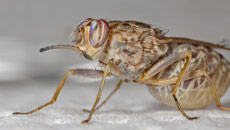
    With genome decoding of tsetse fly that causes the potentially fatal sleeping sickness disease, scientists have discovered new clues to the diet, vision and reproductive strategies of the insect.

    Fly's genome study offers hope for sleeping sickness

    Technology to catch dozing drivers on the go

    Technology to catch dozing drivers on the go
    Long rides at night can now become a lot more pleasant and safe if you listen to researchers who have developed an inexpensive and easier way to find out when the person behind the wheel is about to nod off.

    Technology to catch dozing drivers on the go

    Astronauts may face attention deficit risks

    Astronauts may face attention deficit risks
    Astronauts who are radiation-sensitive need to take extra care to protect their brains as they may face risks of attention deficit and slower reaction times, a study suggests.

    Astronauts may face attention deficit risks

    Befriend a cyber buddy to stay motivated

    Befriend a cyber buddy to stay motivated
    Although a human partner is a better motivator during exercise, a software-generated cyber partner can also be effective in making you work a little extra, research reveals.

    Befriend a cyber buddy to stay motivated

    New method to treat cocaine addiction effectively

    New method to treat cocaine addiction effectively
    There is hardly any effective medications for cocaine addiction, but researchers have now discovered a new compound that can halt cocaine addiction, raising hope for new treatment for drug addicts.

    New method to treat cocaine addiction effectively