Saturday, December 20, 2025
ADVT 
Health

Recreational drug use linked to birth defects

Darpan News Desk IANS, 02 Nov, 2014 06:33 AM
    Babies born to mothers who used recreational drugs during pregnancy are more likely to have birth defects in the brain, said a study.
     
    The study found no significant links between recreational drug use and any other type of birth defect.
     
    "Our findings suggest a link between brain birth defects and recreational drug use in expectant mothers," said the lead author of the study, Anna David from the University College London.
     
    The study included 213 women whose babies had a type of birth defect with potential links to recreational drug use, 143 women whose babies had a birth defect with no previously reported links to drug use and 161 women whose babies were normally formed.
     
    The researchers found that 77 (14.9 percent) of the women who agreed to take part tested positive for at least one type of recreational drug.
     
    Evidence of drug use was found in a significantly higher proportion of women whose babies were born with brain birth defects (35 percent), compared with women whose babies were normally formed (13 percent).
     
    Brain birth defects included brain anomalies other than spina bifida, such as brain cysts and under-development of the brain. These could have severe consequences and lead to lifelong conditions such as cerebral palsy.
     
    The researchers took hair samples from consenting mothers, which were then tested for evidence of recreational drug use.
     
    The results were published in the journal PLOS ONE.
    MORE Health ARTICLES

    New drug ring inside vagina may prevent HIV

    New drug ring inside vagina may prevent HIV
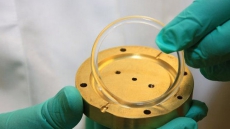
    A novel intravaginal ring implanted with anti-retroviral drug tablets, or pods, maintained steady state drug levels in the vaginal tissues, the key anatomic compartment for preventing sexual HIV transmission, says a study.

    New drug ring inside vagina may prevent HIV

    Sexting linked to risky sexual behaviour among kids

    Sexting linked to risky sexual behaviour among kids
    Parents may wish to openly monitor cell phones of their kids, and check what types of messages they are receiving as researchers have found that kids who receive sexually suggestive text or photo - sexts - are likely to have had sex.

    Sexting linked to risky sexual behaviour among kids

    IVF: Quality of sperm, not donors' age matters

    IVF: Quality of sperm, not donors' age matters
    It is the sperm quality of the donor and not his age that matters in the success of fertility treatment with sperm donation, a study says.

    IVF: Quality of sperm, not donors' age matters

    What? Violent video games promote good behaviour in real life!

    What? Violent video games promote good behaviour in real life!
    Here comes a shocker. Contrary to popular perception that playing violent video games makes people aggressive, a new study says playing such games may actually lead to increased moral sensitivity and pro-social behaviour in real life.

    What? Violent video games promote good behaviour in real life!

    Ladies! Postpone motherhood to live long!

    Ladies! Postpone motherhood to live long!
    Career women who postpone motherhood have reason to cheer as researchers have found that women who have babies later in life are likely to live longer.

    Ladies! Postpone motherhood to live long!

    Poor sleep may affect brain function as you age

    Poor sleep may affect brain function as you age
    Sleep problems are associated with worse memory and executive functions in older people, says a study.

    Poor sleep may affect brain function as you age