Tuesday, February 10, 2026
ADVT 
Health

Research offers hope for patients with cardiovascular disease

Darpan News Desk IANS, 04 Nov, 2014 10:05 AM
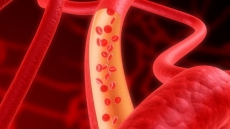
    A new research has shown a protein, which controls the growth of new blood vessels, could potentially reduce the effects of cardiovascular disease in patients' legs, including risks of leg ulcers, gangrene, and amputation.
     
    The new research, involving scientists from the University of Nottingham in Britain and Boston University in the US, has been published in the latest issue of a leading academic journal Nature Medicine, Xinhua reported.
     
    The study centered on the role signal protein vascular endothelial growth factor (VEGF) plays in peripheral arterial disease (PAD), which is one of the most common causes of leg amputation.
     
    The femoral artery becomes blocked by a build-up of fatty deposits leading to ischemia, or loss of blood flow. In the most serious cases, leg tissue begins to die because of gangrene, and the lower leg may need to be removed.
     
    The study found that patients with this disease did not produce the correct form of VEGF needed to stimulate new blood vessel growth in their leg, placing them at greater risk of losing the affected limb.
     
    According to experts, this research has revealed a possible new target for treating people with PAD, which could potentially be manipulated to help improve blood supply to an oxygen-starved limb, lowering the chances of amputation for people with this condition.
     
    The antibody could be used to treat patients with PAD over the course of several months until new blood vessels in their legs have been restored.
     
    The study also showed that administering an antibody of the wrong type of VEGF to obese and diabetic mice reduces the effects of cardiovascular disease. Researchers are now set to develop a similar antibody for use in humans. 

    MORE Health ARTICLES

    Green spaces impact birth weight positively

    Green spaces impact birth weight positively
    Where expecting mothers live can also have a bearing on the birth weight of their babies as researchers have found that mothers who live near green spaces deliver...

    Green spaces impact birth weight positively

    Useful blood gene variants spread in humans worldwide

    Useful blood gene variants spread in humans worldwide
    Two beneficial variants of a gene controlling red blood cells development have spread from Africa into nearly all human populations across the globe, a study reveals....

    Useful blood gene variants spread in humans worldwide

    New genetic risk factors for Parkinson's discovered

    New genetic risk factors for Parkinson's discovered
    In what could lead to new treatment for Parkinson's disease, scientists have identified 24 genetic risk factors involved in the disease, including six that had not...

    New genetic risk factors for Parkinson's discovered

    Shift work can worsen asthma, pneumonia

    Shift work can worsen asthma, pneumonia
    A research has found that drugs widely used to treat lung diseases like asthma or pneumonia work better with the body clock....

    Shift work can worsen asthma, pneumonia

    Healthy lifestyle key for childhood cancer survivors

    Healthy lifestyle key for childhood cancer survivors
    Following a healthy lifestyle may lower childhood cancer survivors' risk of developing the metabolic syndrome, says a study....

    Healthy lifestyle key for childhood cancer survivors

    ECG, blood test must for chest pain sufferers: Study

    ECG, blood test must for chest pain sufferers: Study
    Suffering from chest pain? Do not take it lightly for indigestion or gas pain. Better get an electrocardiogram (ECG) and blood test done to rule out the worst and avoid hospitalisation....

    ECG, blood test must for chest pain sufferers: Study