Tuesday, February 10, 2026
ADVT 
Health

Researchers make IVF safer for women

Darpan News Desk Darpan, 19 Jul, 2014 06:20 AM
    Researchers could have just made IVF - an assisted fertilisation therapy - treatment safer for women after successfully using a new method to stimulate ovulation.
     
    "Our study has shown that natural hormone 'kisspeptin' can be used as a physiological trigger for egg maturation in IVF therapy, said Waljit Dhillo, a professor in endocrinology and metabolism at London's Imperial College.
     
    The team have given the gift of life to 12 couples using a new injection of the natural hormone 'kisspeptin' to make their eggs mature.
     
    Currently doctors use the hormone called human chorionic gonadotropin (hCG) for In Vitro Fertilisation (IVF), but there is a risk that this can over-stimulate the ovaries and threaten the mother's life.
     
    Ovarian hyperstimulation syndrome (OHSS) affects around a third of IVF patients in a mild form, causing symptoms such as nausea and vomiting.
     
    Less than 10 percent of patients experience moderate or severe OHSS which can cause kidney failure.
     
    "OHSS is a major medical problem. It can be fatal in severe cases and it occurs in women undergoing IVF treatment who are otherwise very healthy. We really need more effective natural triggers for egg maturation during IVF treatment, and the results of this trial are very promising," Dhillo explained.
     
    Kisspeptin is broken down more quickly inside the body, meaning the risk of over-stimulation is lower.
     
    According to Alison Harper, one of the mothers who participated in the study, "I went through several cycles of IVF previously but the one in the trial was the least uncomfortable - it was less painful and I felt less swollen."
     
    The study was published in the Journal of Clinical Investigation.

    MORE Health ARTICLES

    Can you believe it? Metabolism existed even before origin of life, reveales study

    Can you believe it? Metabolism existed even before origin of life, reveales study
    The mystery behind how the first organisms on earth could have become metabolically active has been unlocked.

    Can you believe it? Metabolism existed even before origin of life, reveales study

    Fly's genome study offers hope for sleeping sickness

    Fly's genome study offers hope for sleeping sickness
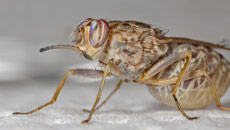
    With genome decoding of tsetse fly that causes the potentially fatal sleeping sickness disease, scientists have discovered new clues to the diet, vision and reproductive strategies of the insect.

    Fly's genome study offers hope for sleeping sickness

    Technology to catch dozing drivers on the go

    Technology to catch dozing drivers on the go
    Long rides at night can now become a lot more pleasant and safe if you listen to researchers who have developed an inexpensive and easier way to find out when the person behind the wheel is about to nod off.

    Technology to catch dozing drivers on the go

    Astronauts may face attention deficit risks

    Astronauts may face attention deficit risks
    Astronauts who are radiation-sensitive need to take extra care to protect their brains as they may face risks of attention deficit and slower reaction times, a study suggests.

    Astronauts may face attention deficit risks

    Befriend a cyber buddy to stay motivated

    Befriend a cyber buddy to stay motivated
    Although a human partner is a better motivator during exercise, a software-generated cyber partner can also be effective in making you work a little extra, research reveals.

    Befriend a cyber buddy to stay motivated

    New method to treat cocaine addiction effectively

    New method to treat cocaine addiction effectively
    There is hardly any effective medications for cocaine addiction, but researchers have now discovered a new compound that can halt cocaine addiction, raising hope for new treatment for drug addicts.

    New method to treat cocaine addiction effectively