Tuesday, February 10, 2026
ADVT 
Health

'Revolutionary' antibiotics to tackle TB

Darpan News Desk IANS, 22 Jul, 2014 07:11 AM
    Why mycobacteria - a family that includes the microbe that causes tuberculosis (TB) - survive oxygen limitation has long been a mystery but not any more. A discovery could lead to a revolutionary class of antibiotics to tackle TB.
     
    Researchers have found that hydrogen is a key factor that enables mycobacteria to survive oxygen-limitation over long periods.
     
    "Mycobacteria grow through combusting their preferred carbon-based fuel sources using oxygen. However, they can also somehow survive for months or years when their oxygen supply is exhausted," said Greg Cook, a professor from University of Otago in New Zealand.
     
    "For example, in people with latent TB infections, mycobacterium tuberculosis bacteria are walled in by clumps of immune and other body cells in what is thought to be an extremely low oxygen environment. However, such patients must be monitored for rest of their lives in case the bacteria become active again," he added.
     
    The bacterium is able to quickly switch its cellular metabolism from a primarily oxygen-based one over to one that uses fermentation for energy production instead.
     
    This metabolic mode depends on the production and recycling of molecular hydrogen, a high-energy fuel and diffusible gas.
     
    These cells produce hydrogen to ensure their survival until they once again have access to sufficient oxygen for growth.
     
    The researchers established that mycobacterium smegmatis metabolises molecular hydrogen using three enzymes called hydrogenases.
     
    One hydrogenase produces hydrogen, whereas the other two consume it. These hydrogenases are activated under oxygen starvation by a master regulator called DosR.
     
    The researchers found that strains of mycobacterium smegmatis in which the genes for the hydrogenases or the regulator DosR had been 'knocked out' experienced a hundred-fold reduction in the long-term survival compared to the normal bacterium.
     
    The study appeared in the journal Proceedings of the National Academy of Sciences.

    MORE Health ARTICLES

    Technology to catch dozing drivers on the go

    Technology to catch dozing drivers on the go
    Long rides at night can now become a lot more pleasant and safe if you listen to researchers who have developed an inexpensive and easier way to find out when the person behind the wheel is about to nod off.

    Technology to catch dozing drivers on the go

    Astronauts may face attention deficit risks

    Astronauts may face attention deficit risks
    Astronauts who are radiation-sensitive need to take extra care to protect their brains as they may face risks of attention deficit and slower reaction times, a study suggests.

    Astronauts may face attention deficit risks

    Befriend a cyber buddy to stay motivated

    Befriend a cyber buddy to stay motivated
    Although a human partner is a better motivator during exercise, a software-generated cyber partner can also be effective in making you work a little extra, research reveals.

    Befriend a cyber buddy to stay motivated

    New method to treat cocaine addiction effectively

    New method to treat cocaine addiction effectively
    There is hardly any effective medications for cocaine addiction, but researchers have now discovered a new compound that can halt cocaine addiction, raising hope for new treatment for drug addicts.

    New method to treat cocaine addiction effectively

    How bariatric surgery can help control diabetes

    How bariatric surgery can help control diabetes
    That bariatric surgery, or obesity surgery, leads to weight loss is well known, but researchers have now identified the mechanism why obesity surgery also leave positive effects on diabetes and heart diseases.

    How bariatric surgery can help control diabetes

    Now, 3D-printed plaster cast to heal wound faster

    Now, 3D-printed plaster cast to heal wound faster
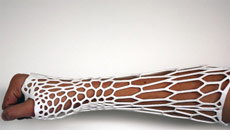
    In what could revolutionise plaster cast technology, a Turkish design student has unveiled a slick 3D-printed cast with ventilation holes that reduces healing time by around 40 percent than currently used plaster casts.

    Now, 3D-printed plaster cast to heal wound faster