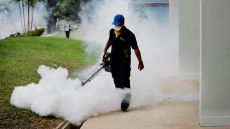
The World Health Organization says climate change-driven heat is a "public health crisis" for workers around the globe and experts say Canada is no exception.
The WHO and the World Meteorological Organization (WMO) released a joint report on Friday saying outdoor workers in construction, farming and other physically demanding jobs are at especially high risk of heat stroke, dehydration, cardiovascular damage and kidney dysfunction.
Although radiation from the sun is an added risk factor on top of air temperature, the report noted that people working indoors in hot, humid conditions are also vulnerable, especially if heat is radiating off of machinery, such as in manufacturing plants.
"The workers keeping our societies running are paying the highest price," said Rüdiger Krech, the WHO's director of environment, climate change and health said in a news briefing in Geneva on Thursday.
"These impacts are especially severe in vulnerable communities with limited access to cooling, health care, and productive labour policies."
Glen Kenny, University of Ottawa research chair in environmental physiology, contributed to the international report and said people may think Canadian workers aren't as vulnerable as workers in hotter parts of the world, but that's a mistake.
"In Canada unfortunately, we have these weather extremes. We go from cold to hot. And so our bodies essentially lose that (heat) adaptation during the winter period," he said in an interview.
The report said the risk of heat exhaustion increases when the core body temperature rises beyond 38 C.
It urged governments and employers to develop heat-health plans, including ways for workers to take breaks and get out of the sun or away from hot machinery and rehydrate regularly.
Employers could also plan shifts and workloads so that the most physically demanding tasks happen during cooler times of the day or evening. They could also lower the intensity of work in periods of high heat, either by reducing the pace of work or incorporating more breaks, the report said.
Whenever possible, workers should wear clothing that allows heat to escape, while still meeting safety requirements for protective gear.
Kenny said it's critical to tailor heat coping strategies to each individual worker, including those who are older, have chronic health conditions or are less physically fit.
The ability to dissipate heat from the body lessens as people age, he said.
The cumulative effect of working in the heat day after day also needs to be considered, Kenny said.
Staying cool and getting rest outside of working hours is important, he said, but those off-hours during a five-day work week won't allow full recovery during intense heat, he said.
"The body essentially gets compromised as we go through the work week," Kenny said.
"If I take a worker on a Monday and look at their body's capacity to lose heat, they are not the same person by day five," he said.
"They have a reduced capacity to lose heat and that needs to be accounted for."
The body gets rid of heat by increasing blood flow to the skin and through sweating, the report said.
When the air is hotter than the skin, the body gains heat and can become dehydrated as more sweating is required to regulate body temperature.
That in turn puts strain on the heart and kidneys because "we only have a certain volume of blood," Kenny said.
"As you steal (water) away from that volume of blood because you're sweating ... you're depleting the body," he said.
Dr. Melissa Lem, a family physician in Vancouver and president of the Canadian Association of Physicians for the Environment, said heat stress affects worker safety in multiple ways.
"Workers' cognitive functions can be impaired so they can have more trouble concentrating, their performance suffers, they have higher rates of injury," Lem said.
"And then when you're breathing faster because you're overheating, you're also breathing in more air pollution which can compound the health harms of heat."
The WHO/WMO report recommends that workers be paired up in a "buddy system" so they can watch out for signs of heat stress.
Signs of heat exhaustion include fatigue, weakness, dizziness, light-headedness, thirst, and mild muscle cramps. If those happen, the worker should be moved to a cool area and drink water or electrolyte beverages.
If the symptoms don't improve after 15 minutes, the heat exhaustion could be severe. Additional signs of severe heat exhaustion include slow reaction time, severe muscle cramps, blurred vision, headache or nausea.
The most serious form of heat stress is heat stroke, which is a medical emergency and requires "aggressive cooling" with ice and cold water and an ambulance should be called, the report said. Heat stroke symptoms can include vomiting, erratic behaviour, confusion or disorientation, garbled speech, hysteria, delirium, shivering, convulsions and loss of consciousness.
Lem said reading the report took her "right back to the 2021 heat dome (in B.C.) when I saw more patients with heat illness than I ever had in my entire career."
Most of the more than 600 people who died that summer were elderly and isolated inside their non-air conditioned homes, but she believes many of the additional people who became ill were likely workers.
In addition to adapting to climate change-driven heat to protect workers, it's also important to address the root causes, she said.
"One of the best ways to keep them safe is capping greenhouse gas emissions and reducing our use and extraction of fossil fuels," Lem said.
"This will have further effects by reducing the air pollution that workers are exposed to," she said.
Picture Courtesy: THE CANADIAN PRESS/Christinne Muschi