Wednesday, December 24, 2025
ADVT 
Health

Scientists create Parkinson's disease in lab

Darpan News Desk IANS, 07 Nov, 2014 11:59 AM
  • Scientists create Parkinson's disease in lab
To unravel what actually goes wrong in people with Parkinson's disease and find out potential new therapy, scientists have successfully created a human stem cell disease model of Parkinson's disease in a dish.
 
The stem cell model allowed scientists to observe key features of the disease in the laboratory, specifically differences in the patients' neurons' ability to produce dopamine, the molecule that is deficient in Parkinson's disease.
 
The researchers studied a pair of identical twins, one affected and one unaffected with Parkinson's disease, another unrelated Parkinson's patient, and four healthy control participants.
 
"The subject of Parkinson's disease discordant twins gave us an incredible opportunity to utilise stem cell models of disease in a dish to unlock some of the biological mechanisms of disease," said Scott Noggle from New York Stem Cell Foundation (NYSCF) Research Institute.
 
Upon analysing the cell models, the scientists found that the dopamine-producing neurons from both twins had reduced GBA enzymatic activity, elevated I-synuclein protein levels, and a reduced capacity to synthesise and release dopamine.
 
In comparison to his unaffected brother, the neurons generated from the affected twin produced less dopamine, had higher levels of an enzyme called monoamine oxidase B (MAO-B), and poor ability to connect with each other.
 
Treating the neurons with molecules that lowered the activity of MAO-B together with overexpressed GBA normalised I -- synuclein and dopamine levels in the cell models.
 
This suggests that a combination therapy for the affected twin may be possible by simultaneously targeting these two enzymes.
 
The findings were published in the journal Cell Reports.
MORE Health ARTICLES

Robot sex to determine how life began

Robot sex to determine how life began
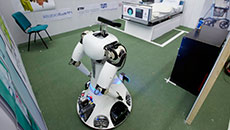
This may come straight from Ripley's Believe It or Not! Scientists have performed robot sex to find how life began on earth. Scientists used rat-sized robots to study evolutionary patterns over thousands of generations without them growing old in the process.

Robot sex to determine how life began

Internal body clock puzzle solved

Internal body clock puzzle solved
Our internal body clock, influenced by the exposure to light, dictates the wake-sleep cycle.

Internal body clock puzzle solved

Want to be happy? Be extrovert

Want to be happy? Be extrovert
If happiness is what you are seeking, just be yourself - call an old friend to dinner or smile at a passerby - as a study has found that people with outgoing behaviour are a happier lot across cultures.

Want to be happy? Be extrovert

Bedtime TV affects kids' sleep badly

Bedtime TV affects kids' sleep badly
Kids who watch more television sleep for shorter duration, a study has confirmed.

Bedtime TV affects kids' sleep badly

Ladies! Watch your weight to cut breast cancer risk

Ladies! Watch your weight to cut breast cancer risk
Gear up for some physical exercise sessions as the risk of breast cancer may go up by 210 percent in obese and overweight women with a certain genetic marker, said a study.

Ladies! Watch your weight to cut breast cancer risk

Doctors can now grow engineered vaginas in women

Doctors can now grow engineered vaginas in women
In a major breakthrough, scientists are now growing specialised organs such as vagina in the lab and successfully implanting them in patients. Four teenage girls received such an implant and the organs are working “normally” now, a study has said.

Doctors can now grow engineered vaginas in women