Wednesday, December 24, 2025
ADVT 
Health

Scientists create Parkinson's disease in lab

Darpan News Desk IANS, 07 Nov, 2014 11:59 AM
  • Scientists create Parkinson's disease in lab
To unravel what actually goes wrong in people with Parkinson's disease and find out potential new therapy, scientists have successfully created a human stem cell disease model of Parkinson's disease in a dish.
 
The stem cell model allowed scientists to observe key features of the disease in the laboratory, specifically differences in the patients' neurons' ability to produce dopamine, the molecule that is deficient in Parkinson's disease.
 
The researchers studied a pair of identical twins, one affected and one unaffected with Parkinson's disease, another unrelated Parkinson's patient, and four healthy control participants.
 
"The subject of Parkinson's disease discordant twins gave us an incredible opportunity to utilise stem cell models of disease in a dish to unlock some of the biological mechanisms of disease," said Scott Noggle from New York Stem Cell Foundation (NYSCF) Research Institute.
 
Upon analysing the cell models, the scientists found that the dopamine-producing neurons from both twins had reduced GBA enzymatic activity, elevated I-synuclein protein levels, and a reduced capacity to synthesise and release dopamine.
 
In comparison to his unaffected brother, the neurons generated from the affected twin produced less dopamine, had higher levels of an enzyme called monoamine oxidase B (MAO-B), and poor ability to connect with each other.
 
Treating the neurons with molecules that lowered the activity of MAO-B together with overexpressed GBA normalised I -- synuclein and dopamine levels in the cell models.
 
This suggests that a combination therapy for the affected twin may be possible by simultaneously targeting these two enzymes.
 
The findings were published in the journal Cell Reports.
MORE Health ARTICLES

New diabetes, obesity drug: Indian-American's promising research

New diabetes, obesity drug: Indian-American's promising research
Two researchers at Indiana University, including an Indian-American, are leading the way towards developing a new potential non-insulin drug for diabetes and obesity, which needs to be taken only once a week.

New diabetes, obesity drug: Indian-American's promising research

Build super muscles with soy-dairy protein

Build super muscles with soy-dairy protein
Not happy with gym results on your muscles? Try a blend of soy and dairy proteins after resistance exercises as this has now been touted as the best way to build muscle mass.

Build super muscles with soy-dairy protein

'Love hormone' bonds animals like humans

'Love hormone' bonds animals like humans
And you thought you had a patent on 'love hormone' when it comes to showing affection! Dogs too have oxytocin and release it in a good quantity when in love or looking for bonding.

'Love hormone' bonds animals like humans

Can you believe it? Metabolism existed even before origin of life, reveales study

Can you believe it? Metabolism existed even before origin of life, reveales study
The mystery behind how the first organisms on earth could have become metabolically active has been unlocked.

Can you believe it? Metabolism existed even before origin of life, reveales study

Fly's genome study offers hope for sleeping sickness

Fly's genome study offers hope for sleeping sickness
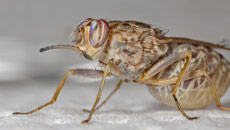
With genome decoding of tsetse fly that causes the potentially fatal sleeping sickness disease, scientists have discovered new clues to the diet, vision and reproductive strategies of the insect.

Fly's genome study offers hope for sleeping sickness

Technology to catch dozing drivers on the go

Technology to catch dozing drivers on the go
Long rides at night can now become a lot more pleasant and safe if you listen to researchers who have developed an inexpensive and easier way to find out when the person behind the wheel is about to nod off.

Technology to catch dozing drivers on the go