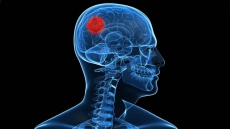
Scientists have, for the first time, found how X-rays and radioactive particles cause cancer in humans by damaging DNA, a finding that may lead to more effective treatments for tumours caused by radiation.
Researchers from the Wellcome Trust Sanger Institute in the UK have been able to identify in human cancers two characteristic patterns of DNA damage caused by ionising radiation, such as gamma rays, X-rays and radioactive particles.
These fingerprint patterns may now enable doctors to identify which tumours have been caused by radiation, and investigate if they should be treated differently.
Previous work on cancer had shown that DNA damage often leaves a molecular fingerprint, known as a mutational signature, on the genome of a cancer cell.
Researchers looked for mutational signatures in 12 patients with secondary radiation-associated tumours, comparing these with 319 that had not been exposed to radiation.
“To find out how radiation could cause cancer, we studied the genomes of cancers caused by radiation in comparison to tumours that arose spontaneously,” said Peter Campbell from the Wellcome Trust Sanger Institute who led the study.
“By comparing the DNA sequences we found two mutational signatures for radiation damage that were independent of cancer type,” said Campbell.

“We then checked the findings with prostate cancers that had or had not been exposed to radiation, and found the same two signatures again. These mutational signatures help us explain how high-energy radiation damages DNA,” he said.
One mutational signature is a deletion where small numbers of DNA bases are cut out.
The second is called a balanced inversion, where the DNA is cut in two places, the middle piece spins round, and is joined back again in the opposite orientation.
Balanced inversions do not happen naturally in the body, but high-energy radiation could provide enough DNA breaks at the same time to make this possible.
“Ionising radiation probably causes all types of mutational damage, but here we can see two specific types of damage and get a sense of what is happening to the DNA,” said Sam Behjati, from University of Cambridge.
“Showers of radiation chop up the genome causing lots of damage simultaneously. This seems to overwhelm the DNA repair mechanism in the cell, leading to the DNA damage we see,” said Behjati.
“This is the first time that scientists have been able to define the damage caused to DNA by ionising radiation,” Adrienne Flanagan, from University College London and Royal National Orthopaedic hospital in the UK.
“These mutational signatures could be a diagnosis tool for both individual cases, and for groups of cancers, and could help us find out which cancers are caused by radiation,” said Flanagan.
The research was published in the journal Nature Communications.