Tuesday, December 23, 2025
ADVT 
Health

Scientists Decode How X-Ray Damages DNA And Causes Cancer

Darpan News Desk IANS, 14 Sep, 2016 10:36 AM
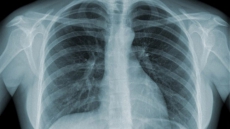
    Scientists have, for the first time, found how X-rays and radioactive particles cause cancer in humans by damaging DNA, a finding that may lead to more effective treatments for tumours caused by radiation.
     
    Researchers from the Wellcome Trust Sanger Institute in the UK have been able to identify in human cancers two characteristic patterns of DNA damage caused by ionising radiation, such as gamma rays, X-rays and radioactive particles.
     
    These fingerprint patterns may now enable doctors to identify which tumours have been caused by radiation, and investigate if they should be treated differently.
     
    Previous work on cancer had shown that DNA damage often leaves a molecular fingerprint, known as a mutational signature, on the genome of a cancer cell.
     
    Researchers looked for mutational signatures in 12 patients with secondary radiation-associated tumours, comparing these with 319 that had not been exposed to radiation.
     
    “To find out how radiation could cause cancer, we studied the genomes of cancers caused by radiation in comparison to tumours that arose spontaneously,” said Peter Campbell from the Wellcome Trust Sanger Institute who led the study.
     
    “By comparing the DNA sequences we found two mutational signatures for radiation damage that were independent of cancer type,” said Campbell.
     
     
    “We then checked the findings with prostate cancers that had or had not been exposed to radiation, and found the same two signatures again. These mutational signatures help us explain how high-energy radiation damages DNA,” he said.
     
    One mutational signature is a deletion where small numbers of DNA bases are cut out.
     
    The second is called a balanced inversion, where the DNA is cut in two places, the middle piece spins round, and is joined back again in the opposite orientation.
     
    Balanced inversions do not happen naturally in the body, but high-energy radiation could provide enough DNA breaks at the same time to make this possible.
     
    “Ionising radiation probably causes all types of mutational damage, but here we can see two specific types of damage and get a sense of what is happening to the DNA,” said Sam Behjati, from University of Cambridge.
     
    “Showers of radiation chop up the genome causing lots of damage simultaneously. This seems to overwhelm the DNA repair mechanism in the cell, leading to the DNA damage we see,” said Behjati.
     
    “This is the first time that scientists have been able to define the damage caused to DNA by ionising radiation,” Adrienne Flanagan, from University College London and Royal National Orthopaedic hospital in the UK.
     
    “These mutational signatures could be a diagnosis tool for both individual cases, and for groups of cancers, and could help us find out which cancers are caused by radiation,” said Flanagan.
     
    The research was published in the journal Nature Communications.

    MORE Health ARTICLES

    More children at risk of measles in wake of Ebola epidemic

    WASHINGTON — Ebola's toll moved beyond 10,000 deaths Thursday even as researchers warned of yet another threat to hard-hit West Africa: On the heels of the unprecedented devastation, large outbreaks of measles and other vaccine-preventable diseases could move into the region.

    More children at risk of measles in wake of Ebola epidemic

    Company blames heat for why nasal spray flu vaccine didn't work well in kids against swine flu

    Company blames heat for why nasal spray flu vaccine didn't work well in kids against swine flu
     The makers of the nasal spray version of the flu vaccine say now they know why it has failed to protect young U.S. children against swine flu — fragile doses got too warm.

    Company blames heat for why nasal spray flu vaccine didn't work well in kids against swine flu

    Potential treatment for drug-resistant TB discovered

    Potential treatment for drug-resistant TB discovered
    Researchers led by an Indian-origin scientist have developed a new drug that may serve as a treatment against multi-drug resistant tuberculosis, a form of the disease that cannot be cured with conventional therapies.

    Potential treatment for drug-resistant TB discovered

    India-Born Scientist's Team Develops Blood Test For Early Cancer Detection

    India-Born Scientist's Team Develops Blood Test For Early Cancer Detection
    Researchers in the US, led by an India-born physician scientist, have said they have developed a new blood test that has the potential to detect cancers in their earliest stages.

    India-Born Scientist's Team Develops Blood Test For Early Cancer Detection

    IUDs, Hormone Implants Rise In Use As Birth Control Among Us Women; Pills Still Most Popular

    IUDs, Hormone Implants Rise In Use As Birth Control Among Us Women; Pills Still Most Popular
    CHICAGO — Long-acting but reversible methods of birth control are becoming increasingly popular among U.S. women, with IUDs redesigned after safety scares and the development of under-the-skin hormone implants, a government report shows.

    IUDs, Hormone Implants Rise In Use As Birth Control Among Us Women; Pills Still Most Popular

    Long, Hot Saunas May Boost Survival, Reduce Fatal Heart Problems, Finnish Research In Men Says

    Long, Hot Saunas May Boost Survival, Reduce Fatal Heart Problems, Finnish Research In Men Says
    CHICAGO — Frequent sauna baths may help you live longer, a study of Finnish men suggests. It would be welcome news if proven true — in Finland where hot, dry saunas are commonplace, and for Americans shivering in a snowy Nordic-like winter.

    Long, Hot Saunas May Boost Survival, Reduce Fatal Heart Problems, Finnish Research In Men Says