Tuesday, June 9, 2026
ADVT 
Health

Shift work can worsen asthma, pneumonia

Darpan News Desk IANS, 28 Jul, 2014 07:31 AM
    A research has found that drugs widely used to treat lung diseases like asthma or pneumonia work better with the body clock.
     
    Once the ancient rhythm of our body clock is disturbed owing to artificial light, shift work and jet lag, medication to treat asthma and pneumonia can become ineffective, scientists said.
     
    The research led by professors David Ray and Andrew Loudon from University of Manchester found that cells lining the lung airways have their own body clock which is the time-keeper for lung inflammation -- both conditions cause swelling in the lungs.
     
    Researchers further discovered that more severe lung inflammation happens as a result of the loss of the body clock working in these cells.
     
    "We found a key molecule known as CXCL5 that facilitates lung inflammation which is a key regulator of how immune cells get into tissues. The loss of CXCL5 completely prevents the time of day regulation of lung inflammation which opens up new ways to treat lung diseases," Loudon said.
     
    During the research, the team uncovered how glucocorticoid hormones from the adrenal gland are vital in controlling the level of inflammation in the cells lining the airway.
     
    "This hormone works through the glucocorticoid receptor, a major regulator of gene expression. We wanted to find out, therefore, if glucocorticoid medicines would also show a time of day effect. Our research shows they do," Ray added.
     
    The team concluded that the rhythm of the clock in the lining of the cells in the lungs is important for lung diseases like asthma, and chronic obstructive pulmonary disease.
     
    Our bodies anticipate the change from day to night by having an internal, or circadian clock.
     
    This explains why it is hard to adjust to shift work.
     
    The body clock regulates sleep but now has been discovered to also regulate our immune system.
     
    The findings were published in the journal Nature Medicine.
    MORE Health ARTICLES

    Now, 3D-printed plaster cast to heal wound faster

    Now, 3D-printed plaster cast to heal wound faster
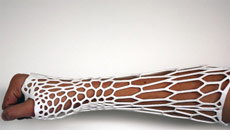
    In what could revolutionise plaster cast technology, a Turkish design student has unveiled a slick 3D-printed cast with ventilation holes that reduces healing time by around 40 percent than currently used plaster casts.

    Now, 3D-printed plaster cast to heal wound faster

    Smart cup that delivers coffee, news too!

    Smart cup that delivers coffee, news too!
    Reading the morning newspaper while sipping a cup of coffee is set to become an even smoother experience as a Finnish coffee roastery company has developed a smart coffee cup that could also display an e-paper.

    Smart cup that delivers coffee, news too!

    An 'upside-down planet' discovered

    An 'upside-down planet' discovered
    Like so many interesting discoveries, this one happened largely by accident. An astronomer has discovered an ‘upside-down planet’ that reveals new method for studying binary star systems.

    An 'upside-down planet' discovered

    Our ancestors enjoyed summer holidays at Antartica!

    Our ancestors enjoyed summer holidays at Antartica!
    If this information stands true, the history books have to be rewritten soon. According to scientists, some parts on the coldest region on our earth - Antartica - was as warm as today's California coast.

    Our ancestors enjoyed summer holidays at Antartica!

    Garnish food with edible flowers for disease-free life!

    Garnish food with edible flowers for disease-free life!
    Forget food, try some flowers instead to increase immunity. If we go by a new research, common edible flowers in China are rich in phenolics and have excellent antioxidant capacity.

    Garnish food with edible flowers for disease-free life!

    Humans left Africa in two migration waves: Study

    Humans left Africa in two migration waves: Study
    In a significant discovery, researchers have found that modern humans may have dispersed in more than one wave of migration out of Africa.

    Humans left Africa in two migration waves: Study