Thursday, December 18, 2025
ADVT 
Health

Sleep apnoea-caused brain damage can be reversed

Darpan News Desk Darpan, 09 Sep, 2014 08:45 AM
  • Sleep apnoea-caused brain damage can be reversed
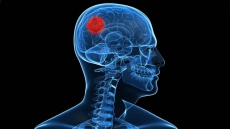
Continuous positive airway pressure (CPAP) therapy can help reverse brain damage caused by severe sleep apnoea, says a study.
 
Untreated sleep apnoea may lead to a significant reduction in white matter fiber integrity in multiple brain areas and the brain damage can be accompanied by impairments to cognition, mood and daytime alertness.
 
"Structural neural injury of the brain of sleep apnoea patients is reversible with effective treatment," said lead author Vincenza Castronovo from the Vita-Salute San Raffaele University in Milano, Italy.
 
"Treatment with CPAP, if patients are adherent to therapy, is effective for normalising the brain structure," Castronovo added.
 
Sleep apnoea warning signs include snoring, choking, gasping or silent breathing pauses during sleep.
 
The study involved 17 men with severe, untreated sleep apnoea who had an average age of 43 years.
 
They were evaluated at baseline and after three and 12 months of treatment with CPAP therapy.
 
The researchers found that although three months of CPAP therapy produced only limited improvements to damaged brain structures, 12 months of CPAP therapy led to an almost complete reversal of white matter abnormalities.
 
Treatment also produced significant improvements in cognitive tests, mood, alertness and quality of life.
 
"Sleep apnoea is a destructive disease that can ruin your health and increase your risk of death," said Timothy Morgenthaler, president, American Academy of Sleep Medicine.
 
"Treatment of sleep apnoea can be life-changing and potentially life-saving," Morgenthaler added.
 
The study appeared in the journal Sleep.
MORE Health ARTICLES

Hypoventilation patients at risk during air travel

Hypoventilation patients at risk during air travel
Obese people who suffer from hypoventilation should be cautious while travelling via air....

Hypoventilation patients at risk during air travel

Immigrant kids in US at higher obesity risk

Immigrant kids in US at higher obesity risk
Immigrant kids in the US are more likely to grow obese than US-born Caucasian children, a study says....

Immigrant kids in US at higher obesity risk

Artificial anti-cancer molecules created in a jiffy

Artificial anti-cancer molecules created in a jiffy
In what could lead to new anti-cancer drugs, researchers have developed a new method to produce molecules that have a similar structure to peptides...

Artificial anti-cancer molecules created in a jiffy

Neuronal 'sweet spot' can curb obesity

Neuronal 'sweet spot' can curb obesity
Preventing weight gain, obesity and diabetes could be as simple as keeping a nuclear receptor from being activated in a small part of the brain, says a new study....

Neuronal 'sweet spot' can curb obesity

First molecular map to detect vision loss created

First molecular map to detect vision loss created
An Indian-origin researcher-led team has created the most detailed map to date of a region of the human eye, long associated with blinding diseases...

First molecular map to detect vision loss created

Revealed: Why brain tumours are more common in men

Revealed: Why brain tumours are more common in men
The absence of a protein known to reduce cancer risk can explain why brain tumours occur more often in males and are more harmful than similar tumours in females....

Revealed: Why brain tumours are more common in men