Thursday, February 12, 2026
ADVT 
Health

Sleep protein protects from cancer

Darpan News Desk IANS, 04 Dec, 2014 11:04 AM
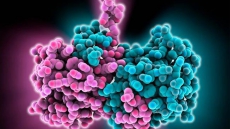
    A new protein responsible for regulating the body's sleep cycle, or circadian rhythm, also protects the body from developing sporadic forms of cancers, new research has found.
     
    Thus, people who work round-the-clock, could in fact be setting themselves back.
     
    "The protein, known as human period 2, has impaired function in the cell when environmental factors, including sleep cycle disruption, are altered," said Carla Finkielstein from College of Science, Virginia Tech.
     
    The new human period 2 protein if unaltered directly interacts with tumour suppressor proteins in cells to control cell division.
     
    "When (human period 2 protein) is non-functional because it is either mutated or somehow modified, then, it is unable to do its job and prevent the cells from dividing at certain times of the day," said Tetsuya Gotoh, research scientist, College of Science, Virginia Tech.
     
    "This is particularly a problem in cases where tumour suppressor genes are mutated as it happens in over 80 percent of all cancer cases," said Gotoh.
     
    By studying human and animal tumour cells, the team found that repressing the human period 2 gene led to both abnormal circadian rhythmicity and a malignant transformation.
     
    Now, researchers are trying to find out if the malfunctioning of the protein and the gene that produces it leads to cancer.
     
    The results of these studies will help develop new, more effective prevention strategies for people at risk due to circadian disruption, such as women working in night shifts.
     
    "These findings highlight the complexity of the circadian-controlled network and emphasize its physiological relevance for human health and for new therapeutic interventions," said Finkielstein.
     
    The study appeared in the journal Molecular Biology of the Cell.

    MORE Health ARTICLES

    Low-dose aspirin reduces blood clot risk

    Low-dose aspirin reduces blood clot risk
    Low-dose aspirin can help prevent new blood clots among people who are at risk and have already suffered a blood clot, says a promising study....

    Low-dose aspirin reduces blood clot risk

    Knee surgery not needed for mild osteoarthritis

    Knee surgery not needed for mild osteoarthritis
    Middle-aged and older patients with mild osteoarthritis of the knee may not benefit from the procedure of arthroscopic knee surgery, says new research....

    Knee surgery not needed for mild osteoarthritis

    Eye changes can predict dementia

    Eye changes can predict dementia
    A loss of cells in the retina is one of the earliest signs of a form of dementia in people with a genetic risk for the brain disorder - even before any changes appear....

    Eye changes can predict dementia

    Canadian doctors have begun using stem cell transplants to treat 'Stiff Person Syndrome'

    Canadian doctors have begun using stem cell transplants to treat 'Stiff Person Syndrome'

    TORONTO - Canadian doctors have begun using stem cell transplants to treat "stiff person syn...

    Canadian doctors have begun using stem cell transplants to treat 'Stiff Person Syndrome'

    Can right brain rhythm create a super-perceiving human?

    Can right brain rhythm create a super-perceiving human?
    A certain type of brainwave plays a key role in our sensitivity towards touch and driving. The right brain rhythm can make people have more perceptual and attentive powers...

    Can right brain rhythm create a super-perceiving human?

    Can Ebola strike India?

    Can Ebola strike India?
    There are about 500 Indians in Guinea, 3,000 in Liberia and 1,200 in Sierra Leone, from where the maximum cases have been reported. Nigeria has a much...

    Can Ebola strike India?