Sunday, December 14, 2025
ADVT 
Health

Sleep twitches connected to brain development in babies

Darpan News Desk IANS, 30 Sep, 2014 11:06 AM
    Know how newborn babies learn about their bodies? By twitching in their sleep, says a new study.
     
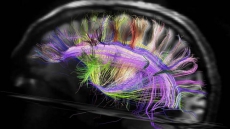
    Sleep twitches activate circuits throughout the developing brain, says the study, suggesting that twitches teach newborns about their limbs and what they can do with them.
     
    Twitches are involuntary, sudden movements that can occur anytime, including sleep hours.
     
    Every time we move while awake, there is a mechanism in our brain that allows us to understand that it is we who made the movement.
     
    "But twitches seem to be different in that the brain is unaware that they are self-generated. And this difference between sleep and wake movements may be critical for how twitches, which are most frequent in early infancy, contribute to brain development," explained Alexandre Tiriac, graduate student in psychology at the University of Iowa.
     
    For the study, Tiriac and fellow graduate students studied the brain activity of un-anesthetized rats between eight and 10 days of age.
     
    They measured the brain activity while the animals were awake and moving and again while the rats were in rapid eye movement (REM) sleep and twitching.
     
    "We noticed there was a lot of brain activity during sleep movements but not when these animals were awake and moving," Tiriac added.
     
    The findings show twitches during REM sleep comprise a different class of movement.
     
    "The discovery is further evidence that sleep twitches - whether in dogs, cats or humans - are connected to brain development, not dreams.
     
    The paper appeared in the journal Current Biology.

    MORE Health ARTICLES

    Canadian doctors have begun using stem cell transplants to treat 'Stiff Person Syndrome'

    Canadian doctors have begun using stem cell transplants to treat 'Stiff Person Syndrome'

    TORONTO - Canadian doctors have begun using stem cell transplants to treat "stiff person syn...

    Canadian doctors have begun using stem cell transplants to treat 'Stiff Person Syndrome'

    Can right brain rhythm create a super-perceiving human?

    Can right brain rhythm create a super-perceiving human?
    A certain type of brainwave plays a key role in our sensitivity towards touch and driving. The right brain rhythm can make people have more perceptual and attentive powers...

    Can right brain rhythm create a super-perceiving human?

    Can Ebola strike India?

    Can Ebola strike India?
    There are about 500 Indians in Guinea, 3,000 in Liberia and 1,200 in Sierra Leone, from where the maximum cases have been reported. Nigeria has a much...

    Can Ebola strike India?

    Indian scientists find a 'wonder herb' in the high Himalayas

    Indian scientists find a 'wonder herb' in the high Himalayas
    In the high hostile peaks of the Himalayas where sustaining life is a challenge in itself, Indian scientists say they have found a "wonder herb" which can regulate...

    Indian scientists find a 'wonder herb' in the high Himalayas

    Robotic walking stick for visually impaired

    Robotic walking stick for visually impaired
    In a first, engineers have designed a robotic walking stick for the visually impaired that can detect the user's immediate path and store localised geographical information...

    Robotic walking stick for visually impaired

    Genes may influence hangover chances

    Genes may influence hangover chances
    According to new research from University of Missouri-Columbia, genetic factors accounted for 45 percent of the difference in hangover frequency in women and 40 percent in men...

    Genes may influence hangover chances