Friday, December 19, 2025
ADVT 
Health

Sleep well to Learn Well

Darpan News Desk Darpan, 06 Jun, 2014 04:14 PM
  • Sleep well to Learn Well
You must have heard and read that sleep helps strengthen and consolidate memories. Now, researchers show how it works.
 
Sleep after learning encourages the growth of dendritic spines - the tiny protrusions from brain cells that connect to other brain cells and facilitate the passage of information across synapses.
 
Moreover, the activity of brain cells during deep sleep, or slow-wave sleep, after learning is critical for such growth, say researchers from NYU Langone Medical Centre, New York.
 
The findings in mice show for the first time how learning and sleep cause physical changes in the motor cortex, a brain region responsible for voluntary movements.
 
“Here, we have shown how sleep helps neurons form very specific connections on dendritic branches that may facilitate long-term memory. Learning causes very specific structural changes in the brain,” said senior investigator Wen-Biao Gan.
 
Using a special laser-scanning microscope that illuminates the glowing fluorescent proteins in the motor cortex, the scientists tracked and took images of dendritic spines along individual branches of dendrites before and after mice learned to balance on a spin rod.
 
Over time, mice learned how to balance on the rod as it gradually spun faster. 
 
Researchers trained two sets of mice: one trained on the spinning rod for an hour and then slept for seven hours.
 
The second trained for the same period of time on the rod but stayed awake for seven hours.
 
The scientists found that the sleep-deprived mice experienced significantly less dendritic spine growth than the well-rested mice.
 
Furthermore, they found that the type of task learned determined which dendritic branches spines would grow, said the study published in the journal Science.


MORE Health ARTICLES

'Love hormone' bonds animals like humans

'Love hormone' bonds animals like humans
And you thought you had a patent on 'love hormone' when it comes to showing affection! Dogs too have oxytocin and release it in a good quantity when in love or looking for bonding.

'Love hormone' bonds animals like humans

Can you believe it? Metabolism existed even before origin of life, reveales study

Can you believe it? Metabolism existed even before origin of life, reveales study
The mystery behind how the first organisms on earth could have become metabolically active has been unlocked.

Can you believe it? Metabolism existed even before origin of life, reveales study

Fly's genome study offers hope for sleeping sickness

Fly's genome study offers hope for sleeping sickness
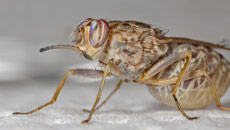
With genome decoding of tsetse fly that causes the potentially fatal sleeping sickness disease, scientists have discovered new clues to the diet, vision and reproductive strategies of the insect.

Fly's genome study offers hope for sleeping sickness

Technology to catch dozing drivers on the go

Technology to catch dozing drivers on the go
Long rides at night can now become a lot more pleasant and safe if you listen to researchers who have developed an inexpensive and easier way to find out when the person behind the wheel is about to nod off.

Technology to catch dozing drivers on the go

Astronauts may face attention deficit risks

Astronauts may face attention deficit risks
Astronauts who are radiation-sensitive need to take extra care to protect their brains as they may face risks of attention deficit and slower reaction times, a study suggests.

Astronauts may face attention deficit risks

Befriend a cyber buddy to stay motivated

Befriend a cyber buddy to stay motivated
Although a human partner is a better motivator during exercise, a software-generated cyber partner can also be effective in making you work a little extra, research reveals.

Befriend a cyber buddy to stay motivated