Have you ever performed calculations or classified words before falling asleep and then experienced continuing those calculations during your snooze? Well, salute your wonder brain.
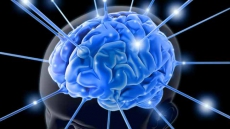
According to research, some parts of the brain are active irrespective of whether we are asleep or awake.
"When people practice simple word classification tasks before nodding off - knowing that a 'cat' is an animal or that 'aceflipu' is not found in the dictionary, for example - their brains will unconsciously continue to make those classifications even in sleep," explained Sid Kouider from the Ecole Normale Superieure (ENS) - a French higher education establishment outside the framework of the public university system.
In collaboration with the University of Cambridge, researchers recorded the EEG of human participants while they were awake and instructed them to classify spoken words as either animals or objects by pressing a button, using the right hand for animals and the left hand for objects.
The procedure allowed the team to map each word category to a specific plan for movement in the brain.
Once that process had become automatic, researchers placed participants in a darkened room to recline comfortably with eyes closed and continue the word classification task as they drifted off to sleep.
Once the participants were asleep, the testing continued but with an entirely new list of words to ensure that responses would require the extraction of word meaning rather than a simpler pairing between stimulus and response.
The researchers' observations of brain activity showed that the participants continued to respond accurately, although more slowly, even as they lay completely motionless and unaware.
"The findings showed that the sleeping brain can be far more active in sleep than one would think," Kouider added.
Far from falling into a limbo when we fall asleep, parts of our brain can routinely process what is going on in our surroundings and apply a relevant scheme of response.
"This explains some everyday life experiences such as our sensitivity to our name in our sleep, or to the specific sound of our alarm clock, compared to equally loud but less relevant sounds," researchers concluded.
The findings were reported in the Cell Press journal Current Biology.