Wednesday, December 24, 2025
ADVT 
Health

Smartphone app tracks how gut bacteria affect health

Darpan News Desk IANS, 25 Jul, 2014 10:03 AM
    A smartphone app used by two volunteers for one year to track their daily life has thrown interesting results about the composition of gut bacteria and its close relationship with health.
     
    These participants used smartphone apps to collect information every day for a year in the study by scientists from Massachusetts Institute of Technology (MIT) and Harvard University.
     
    They logged their daily activity, including diet, exercise, bowel movements and mood and submit regular stool and saliva samples.
     
    The samples were analysed in detail to see what had the greatest effect on the composition of the microbiota.
     
    The results showed that the participants had a "default" microbiota which were unaffected by sleep levels, exercise and mood.
     
    What did have a significant effect on the microbiota were two life events - one subject moved abroad while the other had a significant bout of food poisoning which caused most pre-existing gut bacterial species to decline.
     
    "Life events such as visiting another country or contracting a disease cause a significant shift in the make-up of the gut microbiota - the community of bacteria living in the digestive system," researchers explained.
     
    The authors think the method could be rolled out to studies of human-bacteria relationships with many more participants.
     
    "This has given us a lot of new ideas for follow up studies and analyses of gut microbial ecology as well as infectious diseases in humans," professor Lawrence David from Duke University said.
     
    The study published in the open access journal Genome Biology.

    MORE Health ARTICLES

    Can you believe it? Metabolism existed even before origin of life, reveales study

    Can you believe it? Metabolism existed even before origin of life, reveales study
    The mystery behind how the first organisms on earth could have become metabolically active has been unlocked.

    Can you believe it? Metabolism existed even before origin of life, reveales study

    Fly's genome study offers hope for sleeping sickness

    Fly's genome study offers hope for sleeping sickness
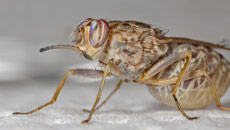
    With genome decoding of tsetse fly that causes the potentially fatal sleeping sickness disease, scientists have discovered new clues to the diet, vision and reproductive strategies of the insect.

    Fly's genome study offers hope for sleeping sickness

    Technology to catch dozing drivers on the go

    Technology to catch dozing drivers on the go
    Long rides at night can now become a lot more pleasant and safe if you listen to researchers who have developed an inexpensive and easier way to find out when the person behind the wheel is about to nod off.

    Technology to catch dozing drivers on the go

    Astronauts may face attention deficit risks

    Astronauts may face attention deficit risks
    Astronauts who are radiation-sensitive need to take extra care to protect their brains as they may face risks of attention deficit and slower reaction times, a study suggests.

    Astronauts may face attention deficit risks

    Befriend a cyber buddy to stay motivated

    Befriend a cyber buddy to stay motivated
    Although a human partner is a better motivator during exercise, a software-generated cyber partner can also be effective in making you work a little extra, research reveals.

    Befriend a cyber buddy to stay motivated

    New method to treat cocaine addiction effectively

    New method to treat cocaine addiction effectively
    There is hardly any effective medications for cocaine addiction, but researchers have now discovered a new compound that can halt cocaine addiction, raising hope for new treatment for drug addicts.

    New method to treat cocaine addiction effectively