Monday, December 22, 2025
ADVT 
Health

Smoking linked with schizophrenia

Darpan News Desk IANS, 17 Sep, 2014 07:41 AM
    There is a close association between schizophrenia and increased rates of tobacco smoking. The relationship between them stems, in part, from an effort by patients to use nicotine to self-medicate symptoms and cognitive impairment associated with the disease, shows a new study.
     
    Researchers at Yale University's school of medicine found that the level of nicotine receptors in the brain was lower in schizophrenia patients than in a matched healthy group. Further, smoking, which is known to increase the levels of receptors for nicotine in the brain, had this effect in both groups, although it was blunted in schizophrenia.
     
    However, in the schizophrenia group, the smoking-related increase in the level of nicotine receptors was associated with lower levels of social withdrawal, blunted emotional and motivational responses, as well as better cognitive function, found the study.
     
    Nicotine mimics the actions of a natural chemical messenger, acetylcholine, which stimulates the receptors for nicotine in the brain.
     
    "We found that lower nicotinic-acetylcholine receptor availability in smokers with schizophrenia is associated with worse negative symptoms and worse performance on tests of executive function," explained Irina Esterlis, an assistant professor at Yale University.
     
    These findings may be relevant to the high rates of smoking in schizophrenia.
     
    "The data seem to suggest that smoking might produce some clinical benefits for some patients by increasing the availability of receptor targets for nicotine in the brain," noted John Krystal, editor of the journal Biological Psychiatry that published the study.
     
    "These findings suggest that nicotinic-acetycholine receptors may be a target for developing treatments for negative symptoms and cognitive deficits associated with schizophrenia, for which no effective treatments exist," Krystal concluded. 

    MORE Health ARTICLES

    Build super muscles with soy-dairy protein

    Build super muscles with soy-dairy protein
    Not happy with gym results on your muscles? Try a blend of soy and dairy proteins after resistance exercises as this has now been touted as the best way to build muscle mass.

    Build super muscles with soy-dairy protein

    'Love hormone' bonds animals like humans

    'Love hormone' bonds animals like humans
    And you thought you had a patent on 'love hormone' when it comes to showing affection! Dogs too have oxytocin and release it in a good quantity when in love or looking for bonding.

    'Love hormone' bonds animals like humans

    Can you believe it? Metabolism existed even before origin of life, reveales study

    Can you believe it? Metabolism existed even before origin of life, reveales study
    The mystery behind how the first organisms on earth could have become metabolically active has been unlocked.

    Can you believe it? Metabolism existed even before origin of life, reveales study

    Fly's genome study offers hope for sleeping sickness

    Fly's genome study offers hope for sleeping sickness
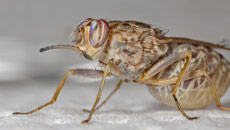
    With genome decoding of tsetse fly that causes the potentially fatal sleeping sickness disease, scientists have discovered new clues to the diet, vision and reproductive strategies of the insect.

    Fly's genome study offers hope for sleeping sickness

    Technology to catch dozing drivers on the go

    Technology to catch dozing drivers on the go
    Long rides at night can now become a lot more pleasant and safe if you listen to researchers who have developed an inexpensive and easier way to find out when the person behind the wheel is about to nod off.

    Technology to catch dozing drivers on the go

    Astronauts may face attention deficit risks

    Astronauts may face attention deficit risks
    Astronauts who are radiation-sensitive need to take extra care to protect their brains as they may face risks of attention deficit and slower reaction times, a study suggests.

    Astronauts may face attention deficit risks